Bikers Against Child Abuse: The Keepers of the Children

In writing The Man Behind the Curtain: A Memoir, I knew I needed to make readers endure a difficult journey before getting to the more uplifting turning point, because that was true of Jessica’s lived experiences.

As a reader, you first need to be immersed in her enduring years of abuse from her stepdad in silence,

then reporting it and immediately being met with opposition from her own family, friends, church, and community,

then trudging through four years of investigation and courthouse theatrics: a preliminary hearing, a juvenile court hearing, and a criminal trial, testifying on the witness stand for hours throughout each of those stages, beginning at age 15,

while her mother and a flock of friends from church sat on the defense’s side of the courtroom, talking and laughing during the proceedings, praying outside the courthouse, and wearing white T-shirts as a symbol of Jessica’s stepdad’s innocence,

all while Jessica was living at home with her mother for much of that time.

You need to first see Jessica standing around in emptying, echoing courthouse hallways with just her attorney or a detective by her side, waiting and waiting for her mother to come talk to her, only to eventually have to give up and go home.

You need to first see what loss and confusion were interspersed with relief when Jessica was sent on a visit to her grandparents’ in New York without being told she wouldn’t be welcomed back home,

and then imagine the exhaustion of traveling from New York to Tennessee repeatedly for further court dates, all while trying to adapt to new surroundings, finish senior year, and start college.

You need to imagine the heartbreak and guilt that were interspersed with the relief when her stepdad was found guilty on thirteen counts and sentenced to eight years in prison,

and the nauseating roller-coaster turn when his attorney later filed an appeal, so Jessica had to prepare to go to court yet again.

All of this, we hope, helps you to understand just what it meant when hundreds of members of Bikers Against Child Abuse (BACA) swooped in on their motorcycles to stand beside her at the courthouse and silence that crowd that had incessantly spoke out against her.

Let’s see this through Jessica’s eyes in an excerpt from our book:

“They call themselves ‘the keepers of the children,’ and I quickly came to see how seriously they commit to that mission. Nana, Poppy, and I arrived at the hotel where we’d be staying and were introduced to the group there. They had come in from as far as California and Washington, from all over the country, filling fifty of the hotel’s rooms and spilling over into another. They stationed themselves outside our room in shifts, all day and night, my own personal bodyguards.

…Among the patches on the bikers’ vests was their motto: No Child Deserves to Live in Fear. I was in awe of how powerfully this group spoke to all that I had been dealing with. As I stood among these two hundred tough-looking people I’d never met before, their swarm of dark leather towering over me, my shyness and self-doubt stepped out of my way. I felt bolstered up, rejuvenated. Positive energy surged around me, a humming reassurance that everything was going to be okay.

I appreciated how much effort the BACA members put into getting to know me as a person, not just a victim of abuse. I wasn’t a statistic to them or a name on a list of contacts to make. They didn’t want to know what had happened to me, but who I was and what mattered to me. That helped me to remember that there was much more to me than what had been dominating my time and energy for the last several years, that this was something I was at the height of dealing with, but it did not define me or what my whole life would be about.”

My research for that part of the book was informed not only by Jessica and her grandparents but by a former BACA leader named Sandy, who was by Jessica’s side throughout those later court dates. She would pick her up, stay with her in court, escort her to the bathroom or to get food. She was a key part of the presence there that helped reassure Jessica she could make it through.

“That’s the most rewarding part of BACA,” Sandy told me, “seeing those kids take the stand and be able to testify and put their heart out there. As scared as they are to say what they’re going to be saying, they get that level of security and then pride in themselves. Seeing them come down off the stand and know they’d done what they needed to do, and know that they will be protected all the way back out that door… It’s such a growth time and a freeing time for them, after so many years of keeping it inside and not telling anybody.”

While the BACA chapter that came to Jessica’s aid was based in Tennessee, I knew there was also a chapter—one of more than three hundred worldwide—in Rochester, New York, not far from where Jessica and I both live now, and I was eager to connect with them as our book made its debut.

As we explain in the book, everyone in the group goes by an alias, a “road name,” and they encourage each of the children they work with to choose a name of their own. From BACA’s perspective, it offers the victims added privacy and protection; Jessica—who proudly chose the name Justice—said it also helped her step out of her shyness and feel welcomed into a tribe, after being an outcast for so long in her own community, her own home.

I was delighted to hear back from a member of BACA’s Rochester chapter who goes by the name Tiger. He was immediately enthusiastic about connecting with me and with Jessica, learning more about her story, and helping us expand our reach. We arranged for the three of us to meet over coffee, along with Tiger’s colleague Ghost Rider.

As we sat around a small table with these two leather-clad, tattooed bikers, sharing teary-eyed moments as well as laughs, we learned that Tiger serves as a child liaison and helped start the Rochester chapter in 2014, covering nine counties from Lake Ontario to the Pennsylvania border. Ghost Rider, who manages the group’s public relations and security, has been involved for about eight years.

BACA typically gets involved soon after abuse is first disclosed. Each child has two primary points of contact involved throughout their case, who are there for them day to day, at any time. At the grand jury stage of court proceedings, no one except the attorney is allowed in with the child—but BACA makes sure they don’t feel alone. They sit with children as they wait, sometimes for up to two days, to testify or retestify. They play games with them to help pass the time and keep them distracted by something positive. “It gives them a chance to forget,” Tiger said.

BACA may not be able to enter the courtroom with the child at that stage, but, Ghost Rider said, “We’re there when they go in, and we’re there when they get out.”

As proceedings progress, BACA contacts are by the child’s side throughout it all; from pre-court meetings through each day in the courtroom, start to finish, the child is never alone. BACA will often walk through the courtroom with the child ahead of the trial, showing them where they’ll sit, making the space less of an unknown and thereby a little less daunting.

BACA’s involvement increases the likelihood of a child persisting to endure the court process. The bikers said they often see improvement in a child’s demeanor between their first two interactions, with confidence and empowerment beginning to blossom.

BACA helps in instances of sexual as well as physical and emotional abuse. Their website states, “We are dedicated to the principle that one of the basic rights of childhood is to be safe and protected, and when the child’s family or environment have failed them, we stand ready to provide it to them.”

The group provides children with nightlights with the BACA logo—“like a bat signal”—and teddy bears that the bikers first squeeze in a hug so that they’re “filled with strength.”

As Jessica’s story demonstrates, having anyone in their corner, and especially a group with such a powerful presence, can make an immeasurable difference for these victims.

As we wrote in our book:

“Despite the number of children they help every year, BACA sees our bond as a forever one, too. They told me that I would be a part of their family for life. I take comfort in that even now, as a young adult, knowing I could turn to them any time I need reassurance and knowing that they continue to help other kids like me.”

Sandy spoke with me about this too, saying it’s common for BACA members to stay in touch with the children they’ve helped as they grow up and start their new lives. She’s seen with pride the news of their weddings and their babies being born. She and her husband were recently in the wedding party for someone they’d helped years before. “That bond continues,” she said.

The Rochester BACA chapter has proven this enduring connection many times over, in their continued compassionate support both of Jessica and of me. They’ve purchased copies of our book to give away, they connected me with the Child Advocacy Center (CAC) of the Finger Lakes, and several of them attended a Lunch and Learn talk I gave at the CAC.

In December, I was honored to be the keynote speaker at the CAC’s “Shine Bright for Children” fundraising gala, at which Rochester’s BACA chapter filled a table. It was so moving to share with that room what BACA and other advocates did for Jessica, to look up and thank the BACA members in attendance for all that they do, and to hear the room erupt in applause for them. I know they don’t do this work for the recognition, but they certainly deserve it.

At our coffee meeting, Jessica and I were moved to tears when Tiger and Ghost Rider showed us the name they’d had patched onto a child-sized BACA vest they use in presentations: Justice, in Jessica’s honor.

When I asked them about the number of cases BACA takes on, the number of children they’ve helped, they simply said, “Too many.” And then, after a pause, “But there’s always room for more.”


To learn more about BACA and donate to their life-changing work, please visit their website.

10 Reasons The Quiet Place Is the Ideal Getaway

I’m here today to let you in on a little secret. Perhaps it’s a poorly kept secret, as I keep discovering more people amidst my own network who are familiar with this Upstate New York gem — but, even then, it feels like we’re part of a really cool club. And I want more of you to get to experience it.

The Quiet Place Getaways are a group of properties nestled in prime locations throughout the Finger Lakes region. As the name promises, the focus is on quiet — you’ll have plenty of space to yourself and feel encouraged to slow down and appreciate your surroundings.

The accommodations range in size to suit anywhere from 2-6 people. Solo retreats are also an option (mostly at the 2-person properties; occasionally at a larger one, depending on availability). I highly recommend this for writers and any other creative types. It’s immensely productive!

The business of bookings and communications is centrally managed by a lovely husband-and-wife team, but each property is individually owned. They’re like a family, each member with its own unique personality and strengths. I don’t know if there’s a certain checklist to be included in the group, but there’s clearly a certain standard to be maintained, a particular vibe shared amongst them so that, browsing the properties, you quickly get a sense of the brand. Not just any place would make the cut.

I’ve been blessed to stay at several of these properties in recent years, and maybe I’ll write about the others another time, but first and foremost I need to tell you about the Naples Chalet, my favorite of the bunch. (Sorry, others; you’re great too!) This place played a critical role in the drafting and revising of my first book, provided a safe getaway during the height of the COVID-19 pandemic, and unexpectedly became a place for healing when I sprained my foot the night before one of my stays.

Coming here feels like nestling into my own little oasis. I walk up the gravel path, an expansive view rolling forth as I round the corner, where I always need to pause to breathe deeply and take it in. Standing here, I feel very small in the most moving way — there is so much to see and smell and hear, the open air stretched out endlessly before me, just from this one little spot. (That’s Canandaigua Lake visible just over the treetops.)

This view, walking up to the Naples Chalet, gets me every time.

Throughout my stay, I feel assured that every need has been thoughtfully addressed — and yet I’m left entirely to my own devices, in the best sense of the phrase. (And the best of both worlds for an introvert like me!) I don’t have to talk to anyone upon checking in, stand in a crowded elevator with chlorine-scented children dripping from a pool, or worry about neighbors having their TV on too loud or slamming their doors in the middle of the night.

While details vary across the properties, the general vibe and the goals are the same, with a focus on relaxing and recharging.

So, with some details here specific to my beloved Naples Chalet, here are 10 reasons why you should consider The Quiet Place for your ideal getaway.

1. It’s QUIET! You’re unlikely to cross paths with any other people while at your stay. If there are other houses anywhere in the vicinity, there’s some sort of unspoken understanding that this is a place for peace, calming, and reflection.

2. At the same time, it’s close to great food, wineries, trails, shops, and more. Naples, Canandaigua, and Bristol are a short drive, so if you want to be among people and find things to do, you’ll have plenty of options.

3. Beautiful views, surrounded by nature, are a standard accommodation. Every property has some combination of deck, porch, sunroom, and/or fire pit, to encourage you to soak up your surroundings.

4. Most properties have a hot tub and/or a soaking tub inside, for an added element of melting away your stress.

5. It’s well stocked with amenities — you’re away from it all but by no means roughing it. You’ll have that “off the grid” feeling while still having electricity, plumbing, heat / AC, and Wi-Fi!

6. The décor is gorgeous and creative, with so many fun little gems to discover. I love walking slowly around the Naples Chalet to see what touches have been added since my last stay. It demonstrates how much the owners care for their properties.

7. Likewise, there are always thoughtful hostess touches. When I step inside the Naples Chalet, I’m greeted by piano music playing softly from the stereo across the room, like I’ve just walked into a spa. Flowers and Hershey kisses grace the table. There are welcoming details at every turn: flyers and coupons for local restaurants and wineries, bottled water, and more fresh flowers in the bathroom and on the deck.

8. It’s the ideal atmosphere whether for a solo retreat (for me, focused writing and marketing time), a couple’s getaway, or catching up with friends. Slowing down and simplifying is a natural catalyst for reconnecting.

My workstation while at the Naples Chalet. I feel like I’m in a treehouse.

9. You’re working with a small group of local people for booking and during your stay, providing great communication and helpful guidance. They can talk you through which property is best for you or what to do while you’re in the area.

10. For all of this, the price is the same as (or less than!) what you’d pay for a nice hotel room — and you’re getting an entire experience.

All of this adds up to a justified investment in myself — my work, my mental health, my overall wellbeing.

I always leave a Naples Chalet stay wishing it could have lasted a bit longer and hoping I can carry home with me the sense of renewal and restoration it’s granted me. As I walk back along the gravel path, I again pause by the Adirondack chairs to take in that view one more time, breathe deeply, and meditate a moment on a flooding warmth of gratitude.

In Honor of Our First Book Birthday

This is a big month for Jessica and me and for our book. The Man Behind the Curtain: A Memoir is officially 1 year old!

And what a year it’s been:

My favorite local bookstore, Lift Bridge Book Shop in Brockport, New York, hosted our launch party. As I spoke to that room filled with loved ones, including several of my grad school professors who helped me form the earliest drafts of this book, I was overwhelmed with emotion and the surreal realization that We made it. This is really happening!

I wrote about takeaways from that first author event in a guest blog post for New Shelves, gurus of the publishing industry.

We also held author events with three libraries, a book club, and Writers & Books, a fabulous literary arts center in Rochester, New York.

We’ve been grateful to get on the shelves at so many wonderful shops and libraries. I’ve started a #shopsmall list here! If you don’t find us at your local library or book shop, please put us in contact or ask them to order the book through Ingram.

We’ve consistently remained among Amazon’s best sellers in the Teen & Young Adult Nonfiction on Sexual Abuse category, alongside names like Laurie Halse Anderson, Aly Raisman, and Chessy Prout, whom I revere and learned so much from in my research.

I was a guest on the Normal Lies podcast, which “challenges beliefs you thought were true about you and your world.” Host Linda Heeler was so compassionate with her questions and feedback.

I hosted a Zoom conversation called Trauma, Reclamation, & Healing with my friend Katie Baptist, a brilliant social worker, sex therapist, feminist, and fellow writer. We talked about what we’ve learned through our work and took questions from the audience. It was an inspiring conversation about silencing, speaking up, shame, and self-discovery.

Jessica and I were on air with WGNS Radio in Tennessee to talk about the book, the long-term effects of abuse (especially from childhood), tips for healing and for helping, the importance of delving into difficult conversations, and so much more. We’re grateful to host Scott Walker for his thoughtful discussion.

I launched my email newsletter, “Letting the Words Out,” sharing news about author events and other ways to get involved, plus highlights from the blog, my social media, life on the farm, and more. I’m looking forward to sharing some new writing-life updates there soon. You can subscribe here.

I’ve savored the growth of this blog, enjoying the creative outlet and opportunities for connection it provides. I appreciated the full-circle moment of blogging about the book’s publication and readers’ reactions, after having earlier introduced you to Jessica and posting a Q&A with her as we neared publication. This blog has been a part of the journey each step of the way.

Inspired by a friend’s generous suggestion, we launched a book donation campaign, asking you to consider purchasing a copy of The Man Behind the Curtain to donate to a place in your community where a new reader can discover it — a library, little free library, school, community center, nonprofit organization, etc. If you get in touch to let me know you’re interested, I’ll mail you a bookplate sticker to include in your donated copy!

We’ve appreciated powerful reviews from readers. If you’ve read the book (thank you!), please leave a review on Amazon or Goodreads as to how it impacted you. We love to hear from our readers, and that word of mouth is immensely helpful in connecting us with more readers!

Throughout all of this, the most amazing part has been the countless inspiring conversations we’ve had with fellow victims and allies. To know that this book is sparking conversation and helping others to feel understood, inspired, and hopeful — that’s exactly what we aimed to do in writing it.

As incredible as this journey has already been, there is so much more to come. It’s exciting to think of this book continuing to find its way into the world and into new readers’ hands.

We’re just getting started.

Many of these opportunities have required continuing to find new ways to challenge myself and step farther outside of my comfort zone. As a debut author and a self-published one to boot, I have to be willing to put myself out there.

But public speaking — the events in person, on Zoom, on the radio, on the podcast — made me nervous beforehand (and a little bit during).

And they left me buzzing with adrenaline and gratitude afterward.

While I’m not typically one to seek out the spotlight, I am one to seek out opportunities to generate discussion around the important (and admittedly difficult) themes our book addresses: abuse, victim shaming, the long-term effects of trauma — and how Jessica’s story is a shining example of the possibilities of rising above it all.

It’s no coincidence that our book’s birthday month is also Sexual Assault Awareness Month as well as National Child Abuse Prevention Month. While we wish there wasn’t still such a pressing need for these kinds of conversations, we’re honored to be a part of them and help further the cause however we can.

As we work to continue these discussions, Jessica and I humbly ask that you consider your contacts and help us make some new connections.

Who do you know who…

  • works with a school, library, bookstore, or nonprofit?
  • is part of a book club?
  • has a podcast or blog?
  • reviews books on Instagram, TikTok, or elsewhere?
  • writes for a magazine, journal, newspaper, or website?
  • has celebrity connections?
  • also speaks about triumph over trauma?
  • has some other literary or newsy interest?

We want to chat with them! Please comment here, send me their contact info, or send them mine, and I’ll be grateful to have a conversation about possibilities.

Sincere thanks to all of you who have helped make this year amazing and have helped this book spread its little wings and fly.

Thank you for continuing to help us pull back the curtain.

Wishing You Anger and Inspiration

My debut book is out(!) — and its content packs a punch. A story like this may upset you or inspire you. I hope it will do both.

The Man Behind the Curtain is a memoir I coauthored for a survivor of sexual abuse whose family and community tried to silence her when the truth came out. As I’ve blogged about before — in introducing you to Jessica and in interviewing her as we neared the finish line — there’s no denying that this is difficult subject matter, and that’s precisely why we felt it needed to be heard.

For too many years, Jessica was the one made to feel guilty about what had been done to her, including feeling guilty if she tried to talk about it — even long after the abuse had been reported and investigated, even long after her rapist stepfather was convicted and imprisoned. The people who continue (yes, present tense) to revere her abuser and portray Jessica as a liar have made grand attempts to shame her into continued silence. As I write about in the book’s afterword, Jessica told me in one of our early meetings, “Every time I tell my story, I apologize for my story.”

This is maddening. Jessica knew it wasn’t right but had to wrestle with that for years, often alone. I knew it wasn’t right upon my first meeting with her, scribbling down page after page of notes by hand as the earliest notion of a book took shape. Now our readers are experiencing that fury, too — and I must say, I love to hear that.

“I was so enraged I wanted to throw the book across the room on multiple occasions,” wrote one reviewer. Another wrote, “This book will make you angry. And it should. A brutally honest depiction of the abuse that a young girl faced, and the heartbreaking account of those closest to her who refused to believe it.”

I want you to feel angry. I also want you to feel proud of Jessica, as I do and as so many readers have told us they do, and cheer for her as she finds her courage and her voice amidst all of those causes of anger.

And I want you to know that Jessica’s story, as shocking and infuriating as it is, is not unique. I want you to be all the angrier to think about the countless others who have lived a story like this or are currently living it. And I want you to be all the more inspired and hopeful and proud to think about each one of those people stepping into their own power. Jessica and I hope that a book like ours helps them, and their loved ones, along that journey. As we write in the book’s last chapter, we’re aiming to “help others take their own first step — or second, or hundredth — toward healing, and toward hope.”

Michelle Bowdler’s memoir, Is Rape a Crime? A Memoir, an Investigation, and a Manifesto, served as a torch guiding my way through my research and writing. In an essay she wrote for Lit Hub, “When Your Memoir Has the Word ‘Rape’ in the Title,” Michelle addresses a struggle similar to Jessica’s: “The temptation to hide the word because the reality of rape is so horrific only made it more critical that it stood front and center in my book. As it was in my life, it would be in my words. If I hid the word rape and its impact on me, it would make anything about my life a lie, an omission, a nod to shame and silence.”

In working to suppress the shame and self-doubt, people like Michelle and Jessica used something terrible as a catalyst for something great, providing a guiding light to other survivors who are still trying to find their way through.

I see a similar light emerging from the darkness when I watch a woman address her church about the abuse their pastor inflicted upon her as a teen, or when I read about the reckoning currently unfolding for the Southern Baptist Convention — which encompasses Jessica’s family’s church — about sexual abuse from the highest ranks, covered up for decades by its executive committee. When I hear these stories, I am simultaneously furious and hopeful, with each emotion amplifying the other. I’m honored if our book can evoke a similar cycle of feelings for our readers.

Yes, the things Jessica experienced can be difficult to hear about. The fact that she and too many other people have lived those difficult things makes it imperative that others of us are willing to hear about them and discuss them. We may not always understand or know what to say. We may feel powerless in response to such horrible things. But we can listen. That seemingly simple action holds a lot of power.

In listening, we acknowledge the victim as a fellow human being with a story bigger than their abuse, with a life still to be made. We bear witness, we learn, we grow.

Another reviewer of our book wrote, “This is admittedly a tough read from an emotional standpoint, but it is well worth the pain to read how Jessica persevered.”

Jessica and I are both so grateful to our readers for being willing to take this emotional journey with us. Collectively, we come out the other side of it stronger. I hope continuing to share stories like this helps us find a way forward, toward a time when there are far fewer of them to tell.

Instagram quote card showcasing a reader review of THE MAN BEHIND THE CURTAIN: "I was so enraged I wanted to throw the book across the room on multiple occasions..."

The Trapper Keeper Is BACK and as Mint as the ’80s Original

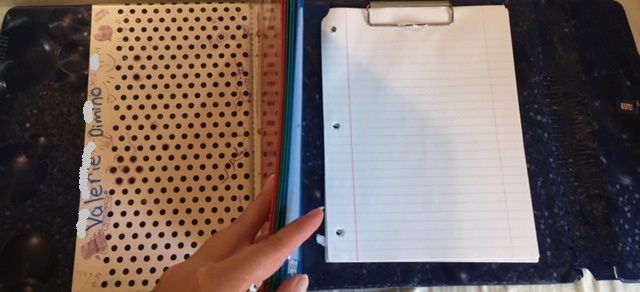
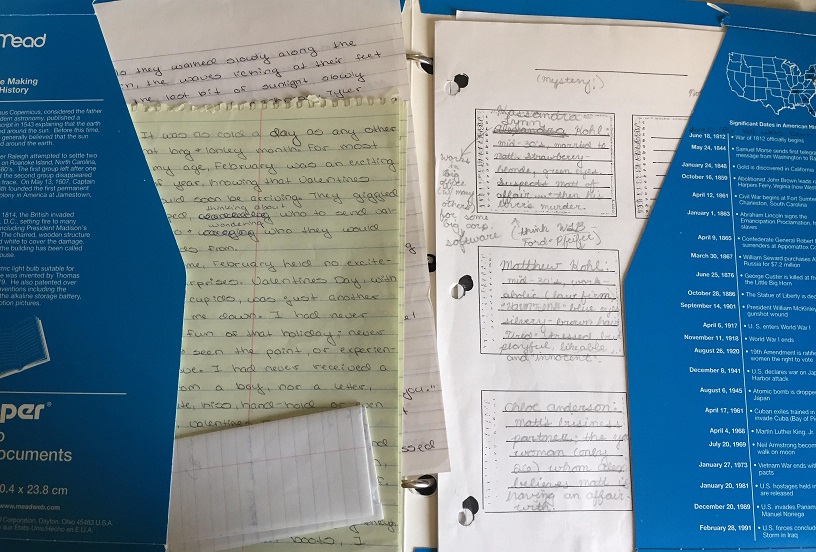
The return of the Trapper Keeper combines several of my favorite things: writing, office supplies, organization, and nostalgia. I had a Trapper Keeper in elementary school that I assume was originally used for in-class purposes, but I remember it best as my first at-home creative writing notebook / folio, using each folder within it to safeguard a separate work in progress — all written out by hand, of course. This love affair started before we had a computer at home, and then the comfortable routine of drafting on the built-in clipboard and filing away the accumulating pages continued for years afterward.

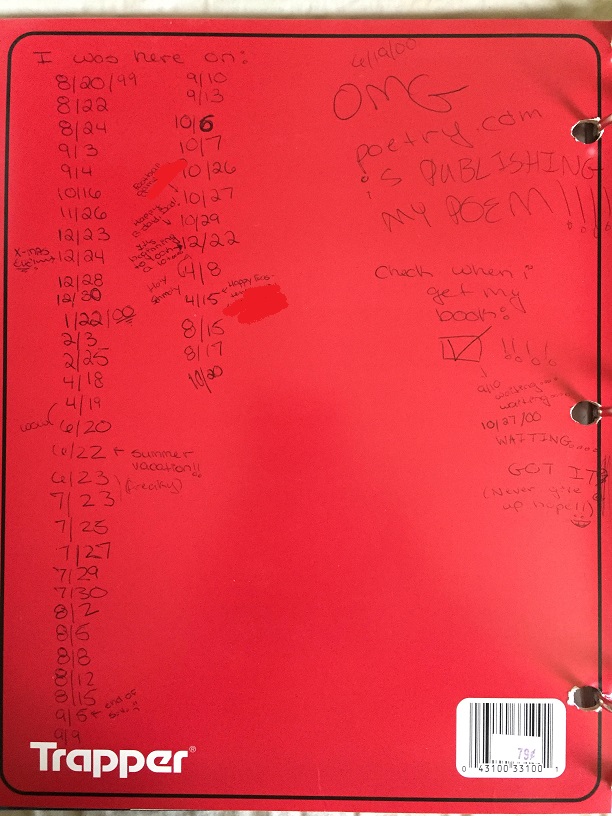
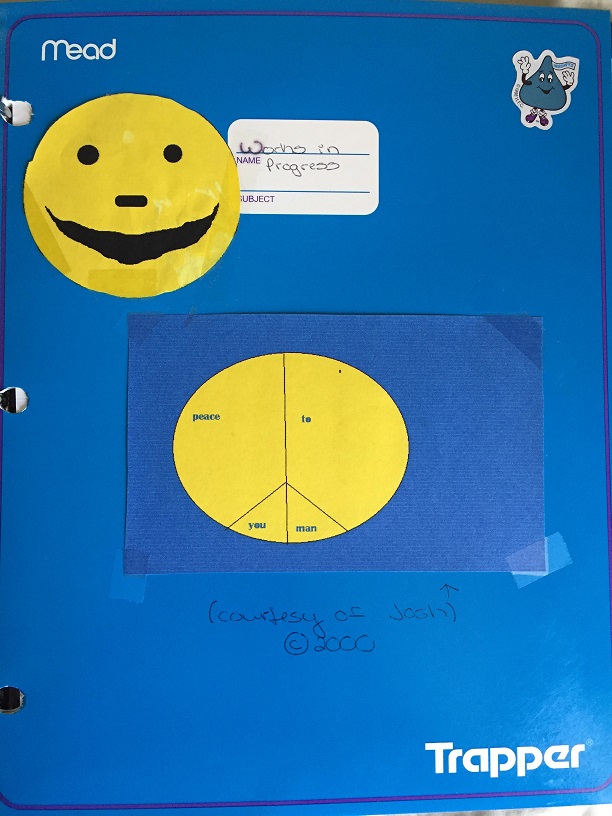
My Trapper Keeper evolved as I did, its folders adorned with stickers and scribbled with the names of crushes that came and went. I doodled and wrote notes to myself (sometimes to my future self) on just about every usable surface area, including along the inner spine and on the cardboard cover beneath the plastic that gradually peeled away from it over the years. While mulling over ideas, or when feeling what I now know to call anxious, I would pick at that plastic backing or run my pen along the ridges of its design, the swirls and lines quickly becoming familiar, well-worn paths covered in ink.

Instagram post from actress Elizabeth Berkley promoting Trapper Keeper's relaunch

When I saw this recent Instagram post from Elizabeth Berkley promoting the Trapper Keeper’s relaunch, I was indeed “so excited” (and appreciative of her excellent hashtag use, as any Saved by the Bell fan will understand), and I soon zipped over to my local Walmart to snag one. The excitement built as I searched the back-to-school aisles for the right section, hoping they’d still be in stock. I’m not ashamed to admit that, once I found them, I let out a little eeee! from behind my mask. They were there, they were real, and they were beautiful!

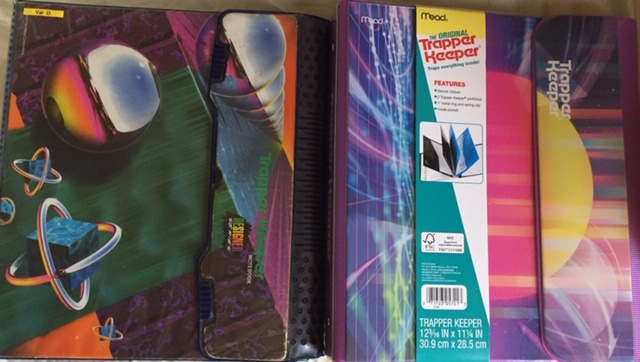
I was thrilled to find that Mead stayed true to the product’s roots and kept all the essentials — the front interior pocket, with holes that help you see what’s inside and also are addictive to trace; a couple of folders in the 3-ring binder; the clipboard hinge in the back; the Velcro flap closure — and even the aesthetic of the designs. The Trapper Keeper has aged well. It’s an effective homage to the original while also a practical purchase for current use. (That’s not just what I told myself while justifying its $9.97 price tag.)

I hope it goes without saying that this is not any sort of official advertisement or sponsored post. I’m not big-leagues enough for that. I just really, really love this product.

Just a couple years ago, I had wanted to get my nephew something for Christmas that would help organize his many writings and drawings and was dismayed to find that Trapper Keepers were no longer around. It would have been perfect! I searched several places for something similar and came up short. There are semi-comparable products aimed at professionals, portfolios that snap or zip shut, but they fall far short of the whimsy of the Trapper Keeper.

Maybe it is largely because I’m a sucker for nostalgia, but the product’s entire design really feels like something special. There’s an important interplay between the colorful prints, the satisfying ripping-open of the Velcro, and the way everything stays tucked neatly inside. Creativity seems inherent in this product. It encourages kids (and adults!) to imagine, explore, brainstorm, and make the abstract concrete. To return to their ideas and build upon them. To believe that they have ideas worth returning to.

I’ve kept my old one around for all these years as a time capsule of sorts, commemorating my early writing days and the sense of boundless purpose and potential they held. I’d occasionally thought about using it again, but I didn’t feel right about disturbing its state, starting a new chapter of use after so many dormant years.

Now, instead, I can start this new chapter in its own cozy enclosure. I’m excited to see what purpose and potential it helps me discover.

  • My old and new Trapper Keepers, side by side
  • Quick inside look at my old Trapper Keeper
  • Quick inside look at my new Trapper Keeper
  • Doodle of the word "puppy" in my old Trapper Keeper
  • Notes to myself on the back of a folder in my old Trapper Keeper
  • Stickers on a folder in my old Trapper Keeper
  • Brainstorming characters' names on a folder in my old Trapper Keeper
  • Price sticker from the Ben Franklin store on a folder in my old Trapper Keeper
  • A folder in my old Trapper Keeper stuffed with drafts and notes
  • I added my birthdate to the list of significant dates in American history on a folder in my old Trapper Keeper
  • Doodle of "I [heart] 'NYSNC" in my old Trapper Keeper
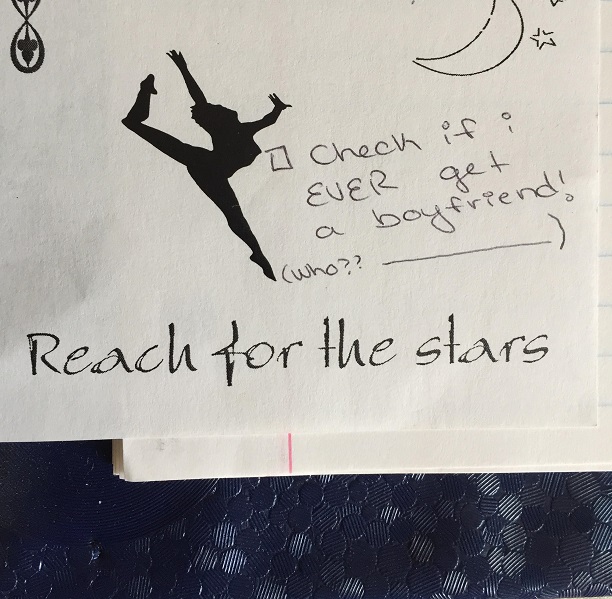
  • Note to my future self in my old Trapper Keeper: "Check if I EVER get a boyfriend!"
  • Doodles beneath the plastic backing in my old Trapper Keeper

“That Door Is Now Closed”: A Sexual Assault Survivor on Coping, Setting Boundaries, and Redefining Her Life

A few months ago, I introduced you to Jessica, a survivor of rape and sexual assault whose forthcoming memoir, The Man Behind the Curtain, I’m coauthoring. We’re nearing the finish line on the writing and aiming to self-publish later this year — stay tuned for exciting updates in the coming months!

Here, I talk with Jessica about what the writing and healing processes have been like for her, what she hopes to accomplish by sharing her story with the world, and what’s next for her — including a major personal life update she never thought possible.

The following transcript has been edited for clarity, including some context from me in brackets.

VAL: In our book, you talk about how you’re no longer willing to let yourself be punished for someone else’s crimes, nor to let your past define you or your future. Tell us a bit more about that journey, how you came to make and embrace that shift in your thinking.

JESSICA: It was all about surrounding myself with positive people, to shut out the negatives. As soon as they found out what had happened to me, my grandparents were so supportive. Consistently going to therapy also really helped. My counselor, Debbie, was and continues to be a very positive person to be around. She understood all the feelings I had and even came down to Tennessee from New York for the trial. They all reminded me, and helped me to keep reminding myself, that everything my stepdad had done to me, and everything my mom had done by turning her back on me, was not my fault.

V: What are some of your proudest moments from the last few years? Are there things you’ve accomplished that you might not have thought possible before?

J: My job [as a flight attendant] is really hard to get into, and I didn’t think I’d ever be able to do something like that because of how much everybody had put me down for years. So, I’m really proud of that, and also of being in a healthy relationship, finally, with such a supportive partner, Matthew. Other than from my grandparents, I didn’t grow up with an example of what a good relationship should be like, so I’m grateful to be able to have that now for myself.

Also, Matthew and I recently found out that we’re having a baby in December! One of the nurse practitioners I had seen after the abuse was reported said she didn’t know if it would be possible for me to have children in the future. Because of that and the trauma of my past, I would not have thought that this could happen for me. We’re so excited!

V: What do you know now that you wish you’d known back when you were a teenager, enduring the abuse and then the trial?

J: I wish I had better coping skills back then. I would shut down a lot; I was just putting one foot in front of the other, doing what I had to do. Now I know how to cope if I start feeling panicky or really anxious. The main one I use is to hold onto an ice cube, which brings my focus onto that and slows my thoughts.

Another important thing I know now is that I’m going to be okay without my mom being in my life. I’m making peace with it. Because of the baby, I’m no longer open to her being in my life. That door is now closed. It was cracked open for years.

V: Has it been difficult to revisit your past in working on this book? How have you navigated and worked through that?

J: Sometimes I do try to avoid it so that I don’t have to think about the past. I’m to the point where I don’t think about it every day. It’s almost like that was another life, one that I haven’t dealt with in so long. But I navigate it by allowing myself to feel however I’m feeling, instead of trying to bury those feelings.

V: What has been the most surprising or rewarding part of working on this project?

J: Honestly, when we announced it on social media. [See, eg, Jessica’s Facebook post and my Facebook post.] There had always been so much negativity surrounding what happened, so seeing all the positivity and supportive reactions was really nice — and surprising. I look forward to the book coming out, even if it just helps one person.

V: Are there any resources that have been particularly helpful to you as a survivor of rape and sexual assault?

J: While I was actively dealing with the aftermath of the abuse, the truth coming out, and the trial, my attorney connected me with Bikers Against Child Abuse (BACA), who became such a helpful support network. [Their mission, in part, is “to create a safer environment for abused children” and “to empower children to not feel afraid of the world in which they live.” They have chapters around the world.]

Also, again, therapy has been so helpful, including a therapy group I found while I was living in Chicago that was focused on sexual assault. It’s great to know that those resources are out there.

And I always rely on family and friends who have been really supportive and who keep me positive.

V: What do you hope readers will learn or gain from your story?

J: I hope readers who have gone through similar things will know there’s a light at the end of the tunnel and won’t always feel so negative about it or so alone. And I hope people will learn signs of what to look for if something might be happening to their children or to someone they know and will learn about the damage it can do if they’re not supported.

V: What’s next for you? What goals do you have for the next few years?

J: I’ll be focusing on the baby. I can keep flying till about 36 weeks, and then, between maternity leave and baby-bonding leave that the airline offers, I won’t be working for about 5-6 months. I do want to go back and continue flying after that. But mostly I’ll be focusing on protecting my child as they grow up. I want to make sure my child doesn’t have to recover from their childhood like I did.

Read some post-publication thoughts here.

Photo by Christine Renard, downloaded from Pexels

Meet Jessica: A Survivor Seeking Justice

Trigger warning: sexual assault

When people ask me what I’m writing, I often struggle to find an effective answer, even though — or maybe because — I’ve been focused mainly on the same project for nearly six years now, am passionate about its message, and am excited about its potential. The project is difficult to summarize; it’s a powerful and emotional topic, being authored in a somewhat nontraditional way, and has been an immense learning curve for me. But I’m so grateful to be writing it, and, as the finish line starts to come into view, I’m excited to share more about it with you here.

For me, it all started (the aforementioned six years ago) when my counselor asked me if I wanted to delve more into my creative writing, knowing I was then working a writing-related day job that was leaving me feeling restless and wanting more. She told me that another one of her clients, Jessica, was an amazing young woman with a powerful story to tell; they’d long talked about the fact that it would make a great book. But Jessica isn’t a writer. Our counselor asked if she could introduce us. From our first meeting, I knew I’d been handed a gift — a challenging project, unquestionably, but a chance to help people, to make my writing mean something more.

For Jessica, it all started much earlier, when, at just 11 years old, she was raped by her stepfather, in what would prove to be only the first of many assaults. It quickly became a routine, an expectation; in a twisted power game, Jessica learned that she had to go along with her stepdad’s demands if she wanted to stay on his good side, be able to hang out with her friends, get her phone back after being grounded, have a MySpace page… This horrible routine continued for four years.

Sadly, this was only the beginning of Jessica’s struggles. When, at 15 years old, her boyfriend found out what was happening and reported the abuse, Jessica was met with a new level of fear and shame, as her mother, brother, and church community chose to believe her abuser instead, even as he was convicted and sentenced to eight years in prison. They labeled Jessica a sinner and a liar and left her to fight through the criminal investigation and multiple courtroom battles largely alone. She had just begun to use her voice and was only further silenced, criticized, and cast aside.

But she is ready to speak now.

In our coauthored memoir The Man Behind the Curtain, Jessica transforms her pain into power and provides a guiding light for those who are still searching for hope. In calling attention to sexual abuse happening at home, by a family member the victim loved and trusted, her story is a powerful addition to the #MeToo movement.

April is Sexual Assault Awareness Month, organized by the National Sexual Violence Resource Center. The Center’s website, RAINN and its additional resources page, and Time’s Up (among many others) offer fantastic support and guidance for survivors and their allies. It’s great to see increased conversation happening about these pressing topics.

We’ll look forward to sharing more with you in the coming months about Jessica’s story and our road to publication. We are both so deeply grateful for your support in this journey.

Read my follow-up Q&A with Jessica here and some post-publication thoughts here.

Here’s a brief excerpt from the book’s prologue:

I will forever be someone who was raped and sexually assaulted. I can’t erase that part of my story, despite how much I’ve wished I could. What I’ve just recently started to accept, though, is that those experiences do not need to define me. I will not let them define me. I’ve struggled in silence for too long, assuming others wouldn’t understand and would judge me. I’ve told myself that my voice doesn’t need to be heard — or, worse, that it doesn’t deserve to be. But I see now that I’ve been letting myself be punished for someone else’s crimes. Maybe I can change what this part of my story means. Maybe it can be a source of power more than pain.

Along the landmine-ridden road to my stepfather’s imprisonment, I lost not only him but my mother and brother, who chose him over me. I lost my role as daughter and sister. I was dragged into the role of victim the first time he put his hands on me; I found the courage to speak from that role only years later; and I am still trying to process how thoroughly that role came to define me and my surroundings. Victim came to mean outcast, interrogated, alone. I am trying now to make it mean more, to take pride in its synonymy with survivor, to make it mean something like warrior.

A CHRISTMAS STORY: A Guidebook for Nostalgic Narratives

There are several movies I make a point of watching every year at Christmas time, in a rather ritualistic honoring of my childhood — one of which, A Christmas Story, stands out largely because it shares my reverence for nostalgia. In fact, part of the reason I love this movie is because my grandpa, who passed away when I was a junior in high school, loved it, and we’d always turn on the 24-hour TNT marathon when we were at my grandparents’ house on Christmas. But I also love it because of how its story is crafted and what it continues to teach me about good storytelling.

The magic of Jean Shepherd’s writing (in the screenplay and its source material, his 1966 book In God We Trust, All Others Pay Cash) as well as his narration of the movie is that, both as a kid and as an adult, it feels like the narrator is speaking to you in a way that resonates. When I was a kid, adult Ralphie’s narrative voice talked about his childhood in a way that implied he understood me — like he was acknowledging that all kids were in on a secret together. He accurately represented the wants and needs of “kiddom.” We shared the perspective that all of the adults in the movie (Ralphie’s parents, his teacher, even Santa) simply don’t “get it” and are being unfair by denying him his coveted Red Ryder BB gun, the thing he wants most for Christmas. Somehow, the risk of shooting his eye out sounds not terrifying to a child viewer but ridiculously overprotective. Viewing the movie as an adult, I see all too easily that Ralphie’s eager enthusiasm to own that gun —influenced partially by successful marketing and partially by jealousy that his friend Flick is getting one — blinds him to the very real risks involved. Further, I can relate to the parents’ various stressors (even without being a parent myself) — the chaotic pace of the holiday season, the cooking, the broken furnace, the blown-out tire — and settle with them into the simple comfort of watching the snow fall through the tree-lit window, wine glasses in hand, after a tiring day.

Catering to both childhood and adulthood, and blurring the lines between the two realms, surely plays a large part in the movie’s continued growth in popularity over several decades, allowing it to appeal to all ages. It also functions as a key element of the movie’s plot. Ralphie’s mother often reaches across the adulthood-childhood boundary as a calming counterpoint to his father’s temper: asking picky-eater Randy to show her “how the piggies eat,” shouting out “Jingle Bells” with the kids in the car, comforting Randy with a glass of milk and gently closing the door to his kitchen-cupboard hideout, covering for Ralphie about his displaced glasses after he gets in a fistfight. But this theme is most powerfully illustrated by the pivotal Christmas morning scene when Ralphie finally gets his beloved rifle. There is a simple beauty in the giddy, almost nervous smile that twitches on The Old Man’s face as he watches Ralphie tear into the wrapping paper, the way he moves his fingers as if loading the rifle himself, experiencing anew a moment that was so significant in his own childhood. In that moment, the divide between kiddom and adulthood that seemed so vast for much of the movie is collapsed, morphing into a shared joy and, thereby, an understanding.

The task at hand for this narrative style is to talk about childhood with the benefit of perspective gained over time, without diminishing what’s sacred about the childhood experience. The narrator has to embody both simultaneously: to recall the joys, worries, and pains of childhood so vividly that we feel the blows Ralphie lets loose on Scut Farkas, Randy’s inability to put his arms down, the delicate “nuance of phrase” in the double- and triple-dare ritual — but with the wisdom that can only be gained by years more of living, providing a frame in which to display those childhood experiences and analyze them fully.

A couple of my favorite lines illustrate this approach well:

“I went out to face the world again, wiser”

— this after the letdown of using his secret decoder pen to uncover an advertisement for Ovaltine. That last word, “wiser,” is not kid Ralphie’s interpretation but adult Ralphie’s, reflecting back on how the experience shifted his worldview. Kid Ralphie just felt disappointed and annoyed. (“A crummy commercial?”) Adult Ralphie knows how that disappointment, after such feverish anticipation, was significant enough to last and color his expectations of future promises.

“The light was getting purple and soft outside — almost time for my father to come home from work.”

I love that Shepherd describes the time of day this way, rather than saying, “It was 5:00.” It makes sense that a child would recognize that powerful image of the changing sky as indicative of his father’s impending arrival home, particularly on that day as he anticipated getting in trouble for fighting Farkas. It’s also precisely the kind of image likely to stick with him into adulthood and stay closely tied to the emotions of those earlier years.

As I hope soon to publish a personal essay I’ve written about the most formative friendship of my childhood, the Christmas Story narrative runs through my head as a prime example of this delicate task, working to merge those two such important perspectives: who I was at 11 and who I am now at 34. The intersection of the two — what I still carry with me from those playground days and what I only know of them now that I’ve lived a couple decades more — is where that aforementioned magic can happen.

I’m excited to share here an excerpt from that essay, which tells the origin story of my sixth-grade girl gang, as we savored a sudden rush of popularity and struggled to bear it responsibly. It’s important to note, as explained later in the manuscript, that we pronounced the name “my girls” — but we spelled it with an “i” because it looked cute.


The MiGirls [an excerpt]

The girls and I had already become known as a unit, but one particular afternoon cemented us as something of a legacy that reached beyond our own classroom’s walls. It was early autumn. I recall the light on the playground as having a golden hue, near sepia; it seems appropriately solemn for the occasion, so I like to tell myself it’s accurate. Regardless of the lighting and the tricks time plays on the weight of things, that day was bursting with a sense of possibility. I had come to cherish the knowledge that I was someone who could make things happen, whose voice mattered for whatever naïve, trivial reasons to those around me, and on that day I felt an urge to make good use of it.

Harper had been lurking around our tree for days, like a raccoon staking out the potential for some good loot. Creeping ever closer to where we sat in the shade, in a circle so compact our knees were touching, she seemed to be watching for the right moment to enter the ring, as if our comfortable routine were a game of Double Dutch. Listening in on our conversations was the norm, but this was more of a direct, offensive move. Rather than acting as if she were merely passing by as she mumbled to herself, she continued to saunter nearer, staring. Her eyes were always so wide and piercing; they gave me the disconcerting feeling she was just barely holding back some form of hysterics. Typically, our whispered crush confessions and giggle fits would trail off as we tried to pretend we weren’t affected by her encroaching presence, and she would soon get bored and move on. That day, though, we couldn’t seem to shake her, and the girls were insistent that I say something. They made pointed eye contact with me, gesturing subtly in Harper’s direction; there seemed to be an unspoken understanding that I should address the problem.

Harper, too, pegged me as the one: as she ventured closer, she warbled my name and beckoned with a finger that looked genuinely witch-like. What was this quality I was emitting that portrayed me as some sort of leader? I had never knowingly displayed a desire to speak for the pack. Now that the opportunity was there, though, staring me down like a dare my inner critic knew I wouldn’t take, I felt a rush akin to what I assumed being drunk must feel like. I walked away from the tree to talk with her, maybe 20 paces out. Open territory, public territory. Not our hallowed space. Away from its shelter, my composure wavered. Trying to be subtle about it, I took a slow, deep breath as I approached her, the crisp air burning my throat.

“What?” I asked flatly. I tried to evoke an effortless confidence.

She wanted to know if we could try being friends again. Even then, her view of the matter struck me as odd: she saw a friendship as something you could force. Just keep pushing until the pieces fit together.

The other three girls appeared behind me tentatively, like deer approaching a roadway.

As we rattled off the evidence against her like prosecuting attorneys, a small crowd began to gather, 15 or 20 kids, from our class and others. This rivalry had become well known. There was something thrilling about realizing that our peers talked about us, amidst their otherness, their own crafts tables and bus lines.

I wasn’t looking to be cruel; there was simply a palpable, urgent need to be rid of this topic. The dance of tenuous friendship had already been through several exhausting rounds over the previous few years; she was always looking to be absolved for her wrongdoings, though not able to assure they wouldn’t be repeated. For every point we presented that day about her past deceptions, she offered a groundless counterpoint. She wanted us simply to trust her that things would be better moving forward, but there was no trust established as a foundation. The crooked grin on her face the entire time she talked implied that she didn’t even believe herself. She was like a salesman looking to close the deal on a crappy product.

“Let me talk with my girls,” I said as I turned, luxuriating in the slow torture of it, the surge of power. I think we all knew there was no further discussion to be had. I took my time walking away, the other girls falling in line like a school of fish. I think I even put my arms around them, something I felt Rizzo might do with the Pink Ladies, complete with hip-swagger and gum-snap. (We had just watched Grease for the first time during a sleepover, so the feel of it was fresh in my mind. We had been enthralled by it, swooning over John Travolta’s combination of coy sensitivity and an oozing sexuality we didn’t yet quite understand.)

As I said it, I placed a slight, but significant, emphasis on “my girls,” highlighting the honorable selectivity of the classification. It was a moment that would live in blissful notoriety among our peers, verbalizing the bond that had long been observed and respected. I had unknowingly formalized an unwritten rule: the four of us were to be understood, consulted, and revered as a single entity. We were made stronger through our unity, and we were not to be crossed. We were a sisterhood that felt like a legend in the making. We were the MiGirls.


In posting this, I send the happiest of holiday wishes to you all, with hopes for a brighter, calmer, healthy 2021. May your dreams on this Christmas be your equivalent of Ralphie’s spectacular hip shots.

Photo by Elly Fairytale, downloaded from Pexels

Enough.

It’s been a while since my last post — which was somewhat intentional. It wasn’t that time slipped by quickly or that I forgot about blogging; in fact, it was rather the opposite: I’ve thought a lot about what I might post next. But nothing seemed good enough — not important enough, not informed enough — to follow the weight and personal significance of that first post.

And then I realized that that self-dialogue was, in itself, the post I needed to write.

I realized how much of my inner monologue (which, heaven help me, is always on) centers around that word, “enough” — or, rather, what I perceive as a lack of enough, a mark I haven’t met: I haven’t written enough lately, this writing isn’t good enough, I didn’t get enough done today, I haven’t lost enough weight yet, we haven’t gotten enough done on our home renovations, I haven’t saved up enough money…

Enough, enough, enough.

I’m hearing these sentiments from a lot of friends and family lately, too, especially those trying to balance parenting, homeschooling, and working from home during the coronavirus pandemic. They feel they aren’t able to devote enough time, attention, or effort to any one of those elements, let alone the combination.

But who defines what’s “enough”? How are we each defining it for ourselves? By comparing our situations to our perceptions of other people’s lives? By notions we had in the past about what our present would look like? I tend more toward the latter — whether that’s what teenage Val thought thirtysomething Val would be like or what when-I-woke-up-this-morning Val envisioned for her day.

I don’t think it’s fair for us to hold ourselves too inflexibly to any sort of past or outside concept of what we’re supposed to have achieved. It’s great to have goals, of course, but so much unfolds in any given day that we never could have anticipated. Whether it’s a small interruption (or ten) or a major, life-altering moment, the unexpected has a tendency to waltz in and command our attention.

And some days it’s not about too much else happening but about the need for very little to happen — days we decide it is enough to have gotten out of bed, maybe taken a shower (maybe not!), maybe put on pants (maybe not!), and been present in whatever form the day takes. Even if that’s just watching TV or reading or goofing around with loved ones. For me, those can be such helpful ways to recharge that I’m then all the more productive the next day. Refocused, realigned, renewed.

Professional writers often advise that, when you find yourself stuck, you simply need to start writing — something, anything — without worrying about how it sounds or where it will end up (ie, whether or not it’s good enough), because you never know what might come out of it. I’ve seen that advice prove true many times in my own writing. Sometimes I only keep a sentence or a key word or a vague idea; sometimes I suddenly find the solution for something I’d been stuck on for months or discover an entirely new idea that I love. Sometimes, of course, I end up with nothing worth keeping. But, even in those instances, maybe having made the effort is enough.

And maybe this unique time we’re in right now is an opportunity to shift our way of thinking. It’s certainly forced us to slow down in many ways, and it’s brought out so much kindness and generosity and creativity that might not have come about otherwise. Personally, I’m trying to apply that kindness, generosity, and creative energy toward myself as well. I want to use this time to reassess my measure of what’s enough. Some days, “enough” is just about doing what I can and continuing to move forward, knowing there are challenges and wonders that await around corners yet to be seen.

enough
A couple years ago, when I was going through a tough time, my counselor recommended I get myself a MantraBand® bracelet that would keep my focus on a positive affirmation. Looking through the many options, we both knew right away that “I am enough” was what I needed to hear. I’ve come a long way since that time, so I no longer feel compelled to wear it, but I keep it displayed prominently above my dresser as a continued reminder.