Blog

Bikers Against Child Abuse: The Keepers of the Children

In writing The Man Behind the Curtain: A Memoir, I knew I needed to make readers endure a difficult journey before getting to the more uplifting turning point, because that was true of Jessica’s lived experiences.

As a reader, you first need to be immersed in her enduring years of abuse from her stepdad in silence,

then reporting it and immediately being met with opposition from her own family, friends, church, and community,

then trudging through four years of investigation and courthouse theatrics: a preliminary hearing, a juvenile court hearing, and a criminal trial, testifying on the witness stand for hours throughout each of those stages, beginning at age 15,

while her mother and a flock of friends from church sat on the defense’s side of the courtroom, talking and laughing during the proceedings, praying outside the courthouse, and wearing white T-shirts as a symbol of Jessica’s stepdad’s innocence,

all while Jessica was living at home with her mother for much of that time.

You need to first see Jessica standing around in emptying, echoing courthouse hallways with just her attorney or a detective by her side, waiting and waiting for her mother to come talk to her, only to eventually have to give up and go home.

You need to first see what loss and confusion were interspersed with relief when Jessica was sent on a visit to her grandparents’ in New York without being told she wouldn’t be welcomed back home,

and then imagine the exhaustion of traveling from New York to Tennessee repeatedly for further court dates, all while trying to adapt to new surroundings, finish senior year, and start college.

You need to imagine the heartbreak and guilt that were interspersed with the relief when her stepdad was found guilty on thirteen counts and sentenced to eight years in prison,

and the nauseating roller-coaster turn when his attorney later filed an appeal, so Jessica had to prepare to go to court yet again.

All of this, we hope, helps you to understand just what it meant when hundreds of members of Bikers Against Child Abuse (BACA) swooped in on their motorcycles to stand beside her at the courthouse and silence that crowd that had incessantly spoke out against her.

Let’s see this through Jessica’s eyes in an excerpt from our book:

“They call themselves ‘the keepers of the children,’ and I quickly came to see how seriously they commit to that mission. Nana, Poppy, and I arrived at the hotel where we’d be staying and were introduced to the group there. They had come in from as far as California and Washington, from all over the country, filling fifty of the hotel’s rooms and spilling over into another. They stationed themselves outside our room in shifts, all day and night, my own personal bodyguards.

…Among the patches on the bikers’ vests was their motto: No Child Deserves to Live in Fear. I was in awe of how powerfully this group spoke to all that I had been dealing with. As I stood among these two hundred tough-looking people I’d never met before, their swarm of dark leather towering over me, my shyness and self-doubt stepped out of my way. I felt bolstered up, rejuvenated. Positive energy surged around me, a humming reassurance that everything was going to be okay.

I appreciated how much effort the BACA members put into getting to know me as a person, not just a victim of abuse. I wasn’t a statistic to them or a name on a list of contacts to make. They didn’t want to know what had happened to me, but who I was and what mattered to me. That helped me to remember that there was much more to me than what had been dominating my time and energy for the last several years, that this was something I was at the height of dealing with, but it did not define me or what my whole life would be about.”

My research for that part of the book was informed not only by Jessica and her grandparents but by a former BACA leader named Sandy, who was by Jessica’s side throughout those later court dates. She would pick her up, stay with her in court, escort her to the bathroom or to get food. She was a key part of the presence there that helped reassure Jessica she could make it through.

“That’s the most rewarding part of BACA,” Sandy told me, “seeing those kids take the stand and be able to testify and put their heart out there. As scared as they are to say what they’re going to be saying, they get that level of security and then pride in themselves. Seeing them come down off the stand and know they’d done what they needed to do, and know that they will be protected all the way back out that door… It’s such a growth time and a freeing time for them, after so many years of keeping it inside and not telling anybody.”

While the BACA chapter that came to Jessica’s aid was based in Tennessee, I knew there was also a chapter—one of more than three hundred worldwide—in Rochester, New York, not far from where Jessica and I both live now, and I was eager to connect with them as our book made its debut.

As we explain in the book, everyone in the group goes by an alias, a “road name,” and they encourage each of the children they work with to choose a name of their own. From BACA’s perspective, it offers the victims added privacy and protection; Jessica—who proudly chose the name Justice—said it also helped her step out of her shyness and feel welcomed into a tribe, after being an outcast for so long in her own community, her own home.

I was delighted to hear back from a member of BACA’s Rochester chapter who goes by the name Tiger. He was immediately enthusiastic about connecting with me and with Jessica, learning more about her story, and helping us expand our reach. We arranged for the three of us to meet over coffee, along with Tiger’s colleague Ghost Rider.

As we sat around a small table with these two leather-clad, tattooed bikers, sharing teary-eyed moments as well as laughs, we learned that Tiger serves as a child liaison and helped start the Rochester chapter in 2014, covering nine counties from Lake Ontario to the Pennsylvania border. Ghost Rider, who manages the group’s public relations and security, has been involved for about eight years.

BACA typically gets involved soon after abuse is first disclosed. Each child has two primary points of contact involved throughout their case, who are there for them day to day, at any time. At the grand jury stage of court proceedings, no one except the attorney is allowed in with the child—but BACA makes sure they don’t feel alone. They sit with children as they wait, sometimes for up to two days, to testify or retestify. They play games with them to help pass the time and keep them distracted by something positive. “It gives them a chance to forget,” Tiger said.

BACA may not be able to enter the courtroom with the child at that stage, but, Ghost Rider said, “We’re there when they go in, and we’re there when they get out.”

As proceedings progress, BACA contacts are by the child’s side throughout it all; from pre-court meetings through each day in the courtroom, start to finish, the child is never alone. BACA will often walk through the courtroom with the child ahead of the trial, showing them where they’ll sit, making the space less of an unknown and thereby a little less daunting.

BACA’s involvement increases the likelihood of a child persisting to endure the court process. The bikers said they often see improvement in a child’s demeanor between their first two interactions, with confidence and empowerment beginning to blossom.

BACA helps in instances of sexual as well as physical and emotional abuse. Their website states, “We are dedicated to the principle that one of the basic rights of childhood is to be safe and protected, and when the child’s family or environment have failed them, we stand ready to provide it to them.”

The group provides children with nightlights with the BACA logo—“like a bat signal”—and teddy bears that the bikers first squeeze in a hug so that they’re “filled with strength.”

As Jessica’s story demonstrates, having anyone in their corner, and especially a group with such a powerful presence, can make an immeasurable difference for these victims.

As we wrote in our book:

“Despite the number of children they help every year, BACA sees our bond as a forever one, too. They told me that I would be a part of their family for life. I take comfort in that even now, as a young adult, knowing I could turn to them any time I need reassurance and knowing that they continue to help other kids like me.”

Sandy spoke with me about this too, saying it’s common for BACA members to stay in touch with the children they’ve helped as they grow up and start their new lives. She’s seen with pride the news of their weddings and their babies being born. She and her husband were recently in the wedding party for someone they’d helped years before. “That bond continues,” she said.

The Rochester BACA chapter has proven this enduring connection many times over, in their continued compassionate support both of Jessica and of me. They’ve purchased copies of our book to give away, they connected me with the Child Advocacy Center (CAC) of the Finger Lakes, and several of them attended a Lunch and Learn talk I gave at the CAC.

In December, I was honored to be the keynote speaker at the CAC’s “Shine Bright for Children” fundraising gala, at which Rochester’s BACA chapter filled a table. It was so moving to share with that room what BACA and other advocates did for Jessica, to look up and thank the BACA members in attendance for all that they do, and to hear the room erupt in applause for them. I know they don’t do this work for the recognition, but they certainly deserve it.

At our coffee meeting, Jessica and I were moved to tears when Tiger and Ghost Rider showed us the name they’d had patched onto a child-sized BACA vest they use in presentations: Justice, in Jessica’s honor.

When I asked them about the number of cases BACA takes on, the number of children they’ve helped, they simply said, “Too many.” And then, after a pause, “But there’s always room for more.”


To learn more about BACA and donate to their life-changing work, please visit their website.

Penny in Paris, Grandpa in Grotte

Up until this past December, I had never traveled out of the country other than to various areas of Canada — which, as a Western New Yorker, is nearby enough to hardly feel like a change of territory. 

I’m blessed that my fiancé, Rich, values traveling and that we have the means to do so. Regardless of your travel inclinations or abilities, I hope you can gain some inspiration from what I share here, whether it’s about taking the trip of a lifetime, exploring your own neighborhood through a new lens, or honoring your family roots in a creative way. 

In December, Rich and I went to London and Paris, and we recently returned from a trip to Italy. I have so much to say about both trips, and I hope to write more soon with a broader overview, but first I have to process my thoughts on what were easily some of the most impactful moments of these trips, both involving symbolic gestures to honor family. Emotions will ensue.

Hat-tip to my Aunt Jeneane, my dad’s sister, for the inspiration behind this project. After learning that I’d be traveling to Paris, she wrote to tell me that my great-aunt Penny (paternal aunt to my dad and his sisters) had always dreamed of going to Paris, describing the fabulous things she would see and do there. Aunt Penny was fabulous, through and through, from her brightly colored clothes to her extravagant accessories to the piano music and vocal melodies she could fill a room with at the drop of a hat. Thinking of her thinking of Paris made me smile. She would be such a natural there. 

Aunt Penny passed away in 2020 before ever getting to make the trip. Aunt Jeneane asked if I might consider taking along with me something that reminded me of Aunt Penny and leaving it in Paris, so we could feel like she finally got to make that trip.

I was immediately on board and quickly knew exactly what I would take with me. Aunt Penny had quite a collection of Christmas jewelry, a large assortment of which came to me after she died. I love wearing her necklaces of tiny lights and her mini-ornament earrings during the holiday season. Given that we were traveling to Paris in December and it would be decked out in Christmas glory, I knew this was the perfect fit.

I chose four pieces from the collection, wrapped them carefully in tissue paper, and stowed them in a bag in my purse. As Rich and I strolled around Paris, taking in the twinkling lights, the smells of hot chocolate and mulled wine, and the decadent department store displays, we had such fun picking out precisely the right spots to leave an Aunt Penny trinket. I imagined her there beside me, her eyes gleaming as she took in the sights and sounds, exclaiming, “Oh, isn’t it wonderful?!”

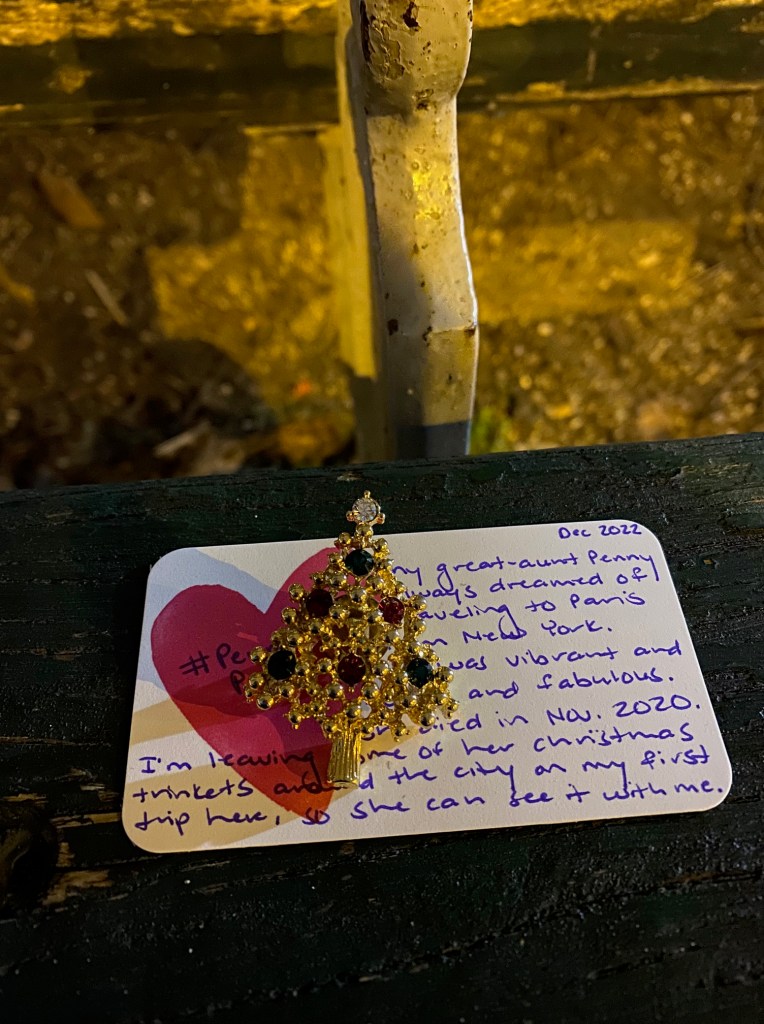
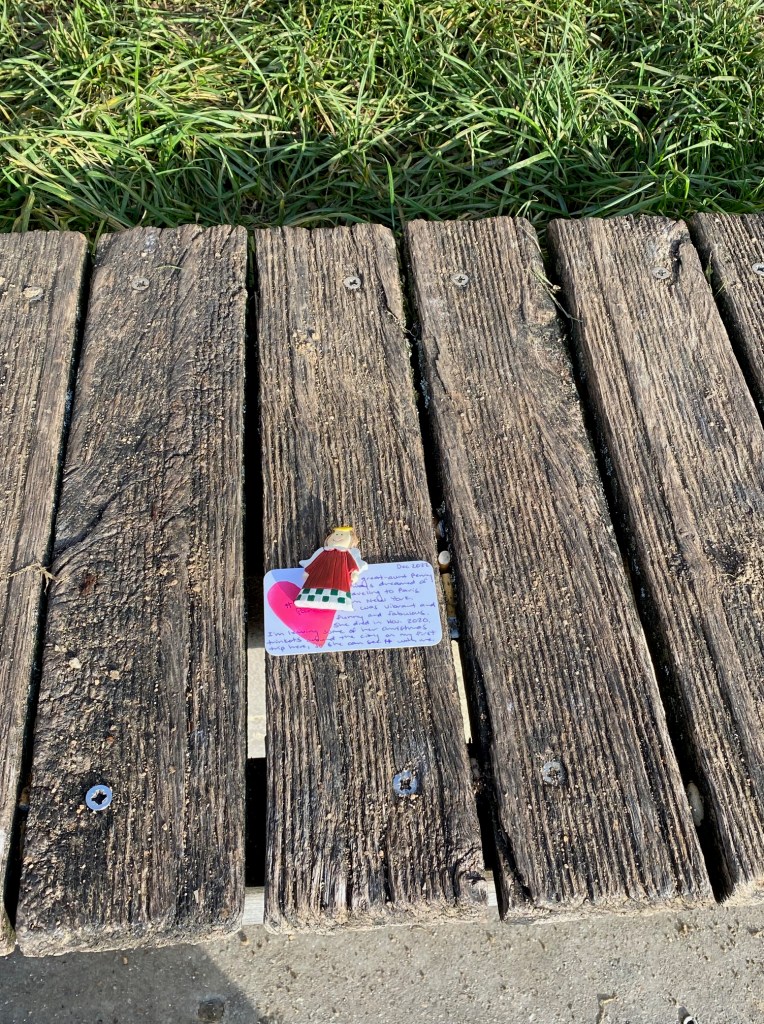
I didn’t feel quite right about leaving these sentimental objects by their lonesomes, so I wrote a little note to set with each one:

My great-aunt Penny always dreamed of traveling to Paris from New York. She was vibrant and funny and fabulous. She died in Nov. 2020. I’m leaving some of her Christmas trinkets around the city on my first trip here, so she can see it with me.

We placed a Christmas tree pin on the roof of the Galeries Lafayette department store, with a panoramic view of the city; another on a bench on the Champs-Élysées, lit up with row upon row of sparkling trees; an angel pin by a walking path along the Seine; and a jingle-bell bracelet in a park housing a Christmas market, with a view of Notre-Dame.

I included the hashtag #PennyinParis on the notes, and my Instagram and Twitter handle on the back, in the hopes of creating a sort of tracking to find out where the mementos ended up. I knew there were risks that the notes would be discarded, would never be seen, or would be difficult for a non-English-speaker to translate. (Only recently, upon the Italy trip, did I learn the wonders of Google Translate — what a gift!) 

Ultimately, it didn’t matter if I never heard from anyone — the point was that now it felt like Aunt Penny got to Paris

And then, about a week later, I heard from Tomi. 

He had found the card by the Seine, without its trinket, and messaged me on Instagram to let me know. He said he lives in a small village in northern France, that he’d found the card on a trip with his school class and was going to keep it on his bookcase. In our brief exchange, I could quickly tell that he understood the importance of Aunt Penny and this effort to honor her. “I really hope that she rests in peace,” he wrote. “I hope a part of her is in the card.”

This compassion was more than I had hoped for. I replied, “I believe there is a part of her in it and therefore now in your life.”

He agreed to give me his mailing address, and I sent him a couple other trinkets from the collection, a pin with Christmas beads dangling from it and a delicate string of mini imitation Christmas lights. On New Year’s Eve, I got a message that he’d received them and put them on his shelf with the card.

And so Aunt Penny continues to enjoy her Paris residency.

The guitar in the background of Tomi’s photo added a layer of emotional impact. I mentioned earlier Aunt Penny singing and playing the piano — my memories of her are wrapped warmly in music. There is a rich history of music on that side of the family. I’ve long heard stories of my great-grandmother’s house being filled regularly with family jam sessions, including my grandfather — my father’s father, Aunt Penny’s brother, Al — singing and playing the upright bass or guitar.

Which brings me to the next chapter of this adventure. 

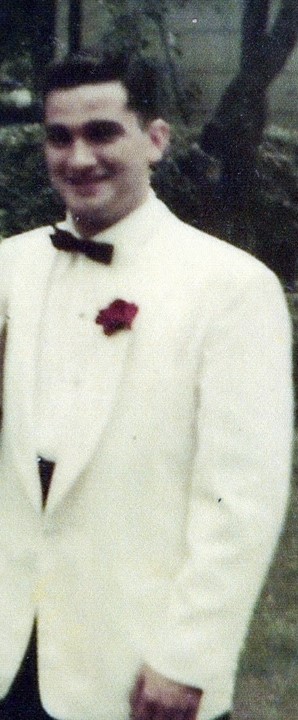
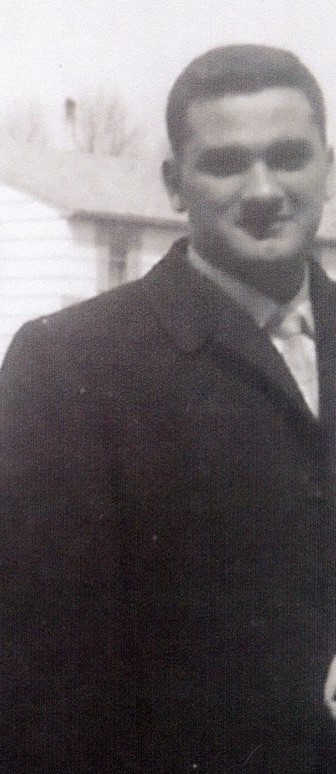
A couple months ago, as my Italy trip neared, my dad asked if I might consider doing something similar to “Penny in Paris” on this trip, in honor of my grandpa. My dad is quiet-natured, cradling his emotions close to his chest but quick to sniffle when talking about his dad, who died of pancreatic cancer at the age of 38. My dad was 13 years old; his sisters were 15 and 6. Of course, I agreed immediately, feeling like I was being entrusted on a crucial quest. He gave me a tie clip and a set of cuff links that had belonged to my grandpa. 

Since first starting to plan our trip, Rich and I knew that the focus would be on Sicily and that we had to include a day trip to Grotte, the small town in Agrigento where both of my paternal great-grandparents were born, from which they immigrated to the US as children. We would be traveling with Rich’s sister, Allison; her wife, Maria; their youngest child, Marcie; and Maria’s brother, Tony, all of whom I adore. I was so grateful that they understood the importance of this trip and the added weight and excitement of it in connecting with my homeland. 

Before leaving, I talked with my great-aunt Marian (sister to Grandpa Al and Aunt Penny) and my dad’s cousin Mary Kay, both of whom had traveled to Grotte years before. I wondered if there were specific street names I should look for or any known relatives still in the area. They both were so excited about my trip and encouraging about my plans to see Grotte, although neither could offer many specifics. Aunt Marian described the area as quiet, simple, and folksy, with people sitting around outside, the women talking and the men playing cards. She told me it was very hilly and that street signs might not easily be found. Mary Kay regaled me of her adventure there pre-cell phones, pre-Internet, making her way by phone book in pursuit of remaining relatives. 

I was not at all discouraged by their descriptions. I felt I now had a sense of what to expect, a vision building of this quiet, slow-paced town. And it didn’t matter to me whether I found any relatives currently living there — I just wanted to set foot on the soil, walk the streets my ancestors walked, and know that this is where we come from.

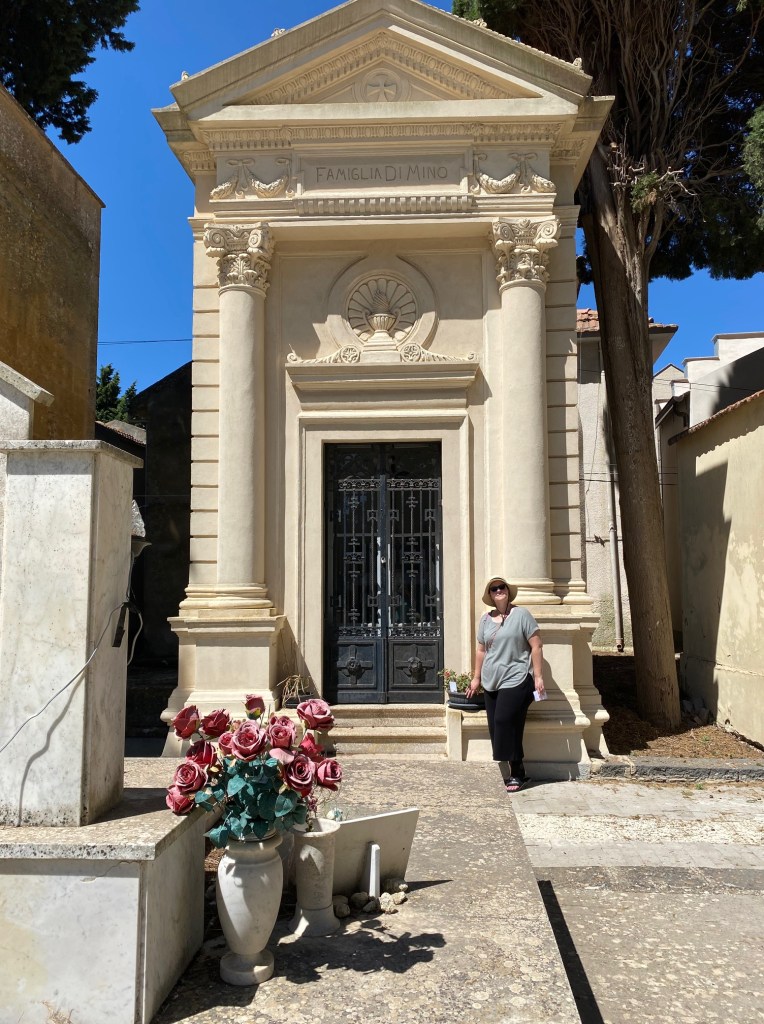
Our arrival in Grotte provided all of that and more. Thanks to the wise recommendation of a friend, we first visited the local cemetery, which I expected to be a tiny corner lot with centuries-old headstones in various states of disrepair. What we found instead was a seemingly endless sprawl of elaborate monuments, mausoleums, and engraved walls, many overflowing with fresh flowers. We could have spent a couple hours there and not seen everything.

Upon first walking in, we crossed paths with a few men working, whom I asked for permission to walk around. Using the aforementioned gift of Google Translate, I explained that my father’s family was from Grotte. They nodded and gestured, of course, come in, and asked about my family name. I mentioned not only Dimino but Valenti, my great-grandmother’s line, and one of the men smiled and pointed to a massive headstone just inside the entrance that bared the Valenti name.

We quickly found many more Valentis and Diminos as well as other names Rich had dutifully noted from his Ancestry DNA research on my behalf. We have a lot of research ahead of us to figure out which threads connect and where! It was such a thrill to walk around with that list of names, everyone taking pictures as they found matches and calling out to come see this or that. 

I was overwhelmed, in such wonderful ways.

The caretaker of the cemetery, an elegant and kind woman, spoke to me enthusiastically in Italian (thanks again, Google Translate!), trying to help ensure we could find what we were looking for. She seemed so deeply happy that we were there and trying to trace my roots, like I was being welcomed home by a stranger to a place I’d never been. She sent me off with a hug and a kiss.

I left the tie clip outside a Dimino family mausoleum, not sure (yet) if those Diminos are related but feeling like it appropriately honored the name’s presence in the area and the commemoration of those who have left us. 

Again, I wrote a note to accompany these trinkets:

My grandfather – my father’s father – Alphonse Dimino, was a child of two American immigrants from Grotte, Francesco and Carmella (Valenti) Dimino. Al was a powerful presence, handsome and charming, a talented musician, and a loving family man, who died far too young.

On this first trip of mine to Sicily, I am honored to leave a little piece of him here in our homeland.

#GrandpaInGrotte

We ventured on into the town, sipping cappuccinos at a corner café, watching the old men sitting around chatting and the women bustling around with canvas bags on their shoulders. The man who had pointed us to that first Valenti headstone in the cemetery drove by and waved. Again, I felt so welcomed, so understood.

I wasn’t sure yet where I wanted to leave my grandpa’s cuff links. I felt a bit of pressure building as I wondered how I’d know what spot in this little area would be the right one.

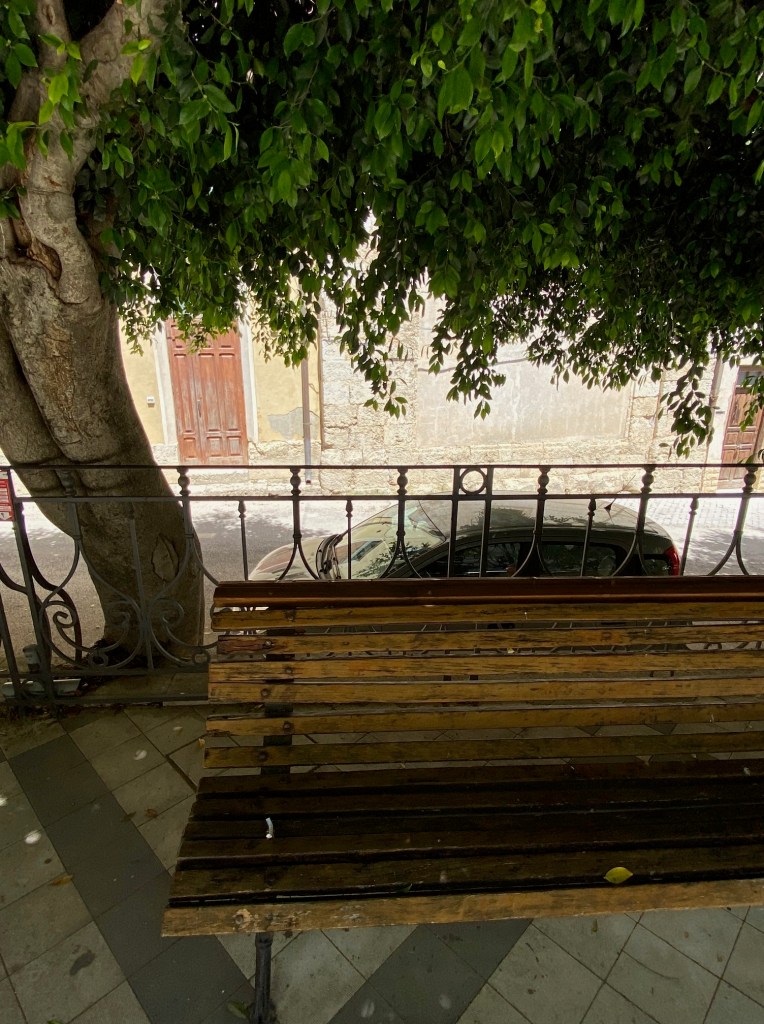
We strolled just a bit further, instinctively seeking some shade from a row of trees along a park-like stretch of sidewalk, lined with benches. And that’s when it felt precisely right.

Much like my visions of Aunt Penny enjoying the views from the benches of Paris, I imagined Grandpa Al sitting there on one of those Grotte benches, enjoying the shade and the breeze rustling through the trees. I looked out at the view he’d be seeing, of an inlaid stone street and buildings that had been there for centuries, and thought, This is the place.

Maria helped me roll the note up tightly so that we could slide it through the cuff links, hoping to ensure they wouldn’t get separated before someone found them. As I laid them down onto the bench, church bells rang out across the square. I was flooded with emotion, especially gratitude, in what felt like a cosmic moment between my grandfather and me.

My grandfather died when both he and his family rightfully assumed they had a lot of time left together. Aunt Penny died during the height of the COVID-19 pandemic, when so many gatherings were postponed with the thought that we’d make up for the lost time soon.

Tomorrow isn’t promised. Book the flight. Take the trip. And then, even when your feet are tired or the weather doesn’t cooperate or you’re hangry, savor every moment of it. 

I’ll be forever grateful that I did. 

Standing in the Mediterranean Sea

10 Reasons The Quiet Place Is the Ideal Getaway

I’m here today to let you in on a little secret. Perhaps it’s a poorly kept secret, as I keep discovering more people amidst my own network who are familiar with this Upstate New York gem — but, even then, it feels like we’re part of a really cool club. And I want more of you to get to experience it.

The Quiet Place Getaways are a group of properties nestled in prime locations throughout the Finger Lakes region. As the name promises, the focus is on quiet — you’ll have plenty of space to yourself and feel encouraged to slow down and appreciate your surroundings.

The accommodations range in size to suit anywhere from 2-6 people. Solo retreats are also an option (mostly at the 2-person properties; occasionally at a larger one, depending on availability). I highly recommend this for writers and any other creative types. It’s immensely productive!

The business of bookings and communications is centrally managed by a lovely husband-and-wife team, but each property is individually owned. They’re like a family, each member with its own unique personality and strengths. I don’t know if there’s a certain checklist to be included in the group, but there’s clearly a certain standard to be maintained, a particular vibe shared amongst them so that, browsing the properties, you quickly get a sense of the brand. Not just any place would make the cut.

I’ve been blessed to stay at several of these properties in recent years, and maybe I’ll write about the others another time, but first and foremost I need to tell you about the Naples Chalet, my favorite of the bunch. (Sorry, others; you’re great too!) This place played a critical role in the drafting and revising of my first book, provided a safe getaway during the height of the COVID-19 pandemic, and unexpectedly became a place for healing when I sprained my foot the night before one of my stays.

Coming here feels like nestling into my own little oasis. I walk up the gravel path, an expansive view rolling forth as I round the corner, where I always need to pause to breathe deeply and take it in. Standing here, I feel very small in the most moving way — there is so much to see and smell and hear, the open air stretched out endlessly before me, just from this one little spot. (That’s Canandaigua Lake visible just over the treetops.)

This view, walking up to the Naples Chalet, gets me every time.

Throughout my stay, I feel assured that every need has been thoughtfully addressed — and yet I’m left entirely to my own devices, in the best sense of the phrase. (And the best of both worlds for an introvert like me!) I don’t have to talk to anyone upon checking in, stand in a crowded elevator with chlorine-scented children dripping from a pool, or worry about neighbors having their TV on too loud or slamming their doors in the middle of the night.

While details vary across the properties, the general vibe and the goals are the same, with a focus on relaxing and recharging.

So, with some details here specific to my beloved Naples Chalet, here are 10 reasons why you should consider The Quiet Place for your ideal getaway.

1. It’s QUIET! You’re unlikely to cross paths with any other people while at your stay. If there are other houses anywhere in the vicinity, there’s some sort of unspoken understanding that this is a place for peace, calming, and reflection.

2. At the same time, it’s close to great food, wineries, trails, shops, and more. Naples, Canandaigua, and Bristol are a short drive, so if you want to be among people and find things to do, you’ll have plenty of options.

3. Beautiful views, surrounded by nature, are a standard accommodation. Every property has some combination of deck, porch, sunroom, and/or fire pit, to encourage you to soak up your surroundings.

4. Most properties have a hot tub and/or a soaking tub inside, for an added element of melting away your stress.

5. It’s well stocked with amenities — you’re away from it all but by no means roughing it. You’ll have that “off the grid” feeling while still having electricity, plumbing, heat / AC, and Wi-Fi!

6. The décor is gorgeous and creative, with so many fun little gems to discover. I love walking slowly around the Naples Chalet to see what touches have been added since my last stay. It demonstrates how much the owners care for their properties.

7. Likewise, there are always thoughtful hostess touches. When I step inside the Naples Chalet, I’m greeted by piano music playing softly from the stereo across the room, like I’ve just walked into a spa. Flowers and Hershey kisses grace the table. There are welcoming details at every turn: flyers and coupons for local restaurants and wineries, bottled water, and more fresh flowers in the bathroom and on the deck.

8. It’s the ideal atmosphere whether for a solo retreat (for me, focused writing and marketing time), a couple’s getaway, or catching up with friends. Slowing down and simplifying is a natural catalyst for reconnecting.

My workstation while at the Naples Chalet. I feel like I’m in a treehouse.

9. You’re working with a small group of local people for booking and during your stay, providing great communication and helpful guidance. They can talk you through which property is best for you or what to do while you’re in the area.

10. For all of this, the price is the same as (or less than!) what you’d pay for a nice hotel room — and you’re getting an entire experience.

All of this adds up to a justified investment in myself — my work, my mental health, my overall wellbeing.

I always leave a Naples Chalet stay wishing it could have lasted a bit longer and hoping I can carry home with me the sense of renewal and restoration it’s granted me. As I walk back along the gravel path, I again pause by the Adirondack chairs to take in that view one more time, breathe deeply, and meditate a moment on a flooding warmth of gratitude.

In Honor of Our First Book Birthday

This is a big month for Jessica and me and for our book. The Man Behind the Curtain: A Memoir is officially 1 year old!

And what a year it’s been:

My favorite local bookstore, Lift Bridge Book Shop in Brockport, New York, hosted our launch party. As I spoke to that room filled with loved ones, including several of my grad school professors who helped me form the earliest drafts of this book, I was overwhelmed with emotion and the surreal realization that We made it. This is really happening!

I wrote about takeaways from that first author event in a guest blog post for New Shelves, gurus of the publishing industry.

We also held author events with three libraries, a book club, and Writers & Books, a fabulous literary arts center in Rochester, New York.

We’ve been grateful to get on the shelves at so many wonderful shops and libraries. I’ve started a #shopsmall list here! If you don’t find us at your local library or book shop, please put us in contact or ask them to order the book through Ingram.

We’ve consistently remained among Amazon’s best sellers in the Teen & Young Adult Nonfiction on Sexual Abuse category, alongside names like Laurie Halse Anderson, Aly Raisman, and Chessy Prout, whom I revere and learned so much from in my research.

I was a guest on the Normal Lies podcast, which “challenges beliefs you thought were true about you and your world.” Host Linda Heeler was so compassionate with her questions and feedback.

I hosted a Zoom conversation called Trauma, Reclamation, & Healing with my friend Katie Baptist, a brilliant social worker, sex therapist, feminist, and fellow writer. We talked about what we’ve learned through our work and took questions from the audience. It was an inspiring conversation about silencing, speaking up, shame, and self-discovery.

Jessica and I were on air with WGNS Radio in Tennessee to talk about the book, the long-term effects of abuse (especially from childhood), tips for healing and for helping, the importance of delving into difficult conversations, and so much more. We’re grateful to host Scott Walker for his thoughtful discussion.

I launched my email newsletter, “Letting the Words Out,” sharing news about author events and other ways to get involved, plus highlights from the blog, my social media, life on the farm, and more. I’m looking forward to sharing some new writing-life updates there soon. You can subscribe here.

I’ve savored the growth of this blog, enjoying the creative outlet and opportunities for connection it provides. I appreciated the full-circle moment of blogging about the book’s publication and readers’ reactions, after having earlier introduced you to Jessica and posting a Q&A with her as we neared publication. This blog has been a part of the journey each step of the way.

Inspired by a friend’s generous suggestion, we launched a book donation campaign, asking you to consider purchasing a copy of The Man Behind the Curtain to donate to a place in your community where a new reader can discover it — a library, little free library, school, community center, nonprofit organization, etc. If you get in touch to let me know you’re interested, I’ll mail you a bookplate sticker to include in your donated copy!

We’ve appreciated powerful reviews from readers. If you’ve read the book (thank you!), please leave a review on Amazon or Goodreads as to how it impacted you. We love to hear from our readers, and that word of mouth is immensely helpful in connecting us with more readers!

Throughout all of this, the most amazing part has been the countless inspiring conversations we’ve had with fellow victims and allies. To know that this book is sparking conversation and helping others to feel understood, inspired, and hopeful — that’s exactly what we aimed to do in writing it.

As incredible as this journey has already been, there is so much more to come. It’s exciting to think of this book continuing to find its way into the world and into new readers’ hands.

We’re just getting started.

Many of these opportunities have required continuing to find new ways to challenge myself and step farther outside of my comfort zone. As a debut author and a self-published one to boot, I have to be willing to put myself out there.

But public speaking — the events in person, on Zoom, on the radio, on the podcast — made me nervous beforehand (and a little bit during).

And they left me buzzing with adrenaline and gratitude afterward.

While I’m not typically one to seek out the spotlight, I am one to seek out opportunities to generate discussion around the important (and admittedly difficult) themes our book addresses: abuse, victim shaming, the long-term effects of trauma — and how Jessica’s story is a shining example of the possibilities of rising above it all.

It’s no coincidence that our book’s birthday month is also Sexual Assault Awareness Month as well as National Child Abuse Prevention Month. While we wish there wasn’t still such a pressing need for these kinds of conversations, we’re honored to be a part of them and help further the cause however we can.

As we work to continue these discussions, Jessica and I humbly ask that you consider your contacts and help us make some new connections.

Who do you know who…

  • works with a school, library, bookstore, or nonprofit?
  • is part of a book club?
  • has a podcast or blog?
  • reviews books on Instagram, TikTok, or elsewhere?
  • writes for a magazine, journal, newspaper, or website?
  • has celebrity connections?
  • also speaks about triumph over trauma?
  • has some other literary or newsy interest?

We want to chat with them! Please comment here, send me their contact info, or send them mine, and I’ll be grateful to have a conversation about possibilities.

Sincere thanks to all of you who have helped make this year amazing and have helped this book spread its little wings and fly.

Thank you for continuing to help us pull back the curtain.

A Blog for the Turn of the Year

We’re officially 1/52 of the way through 2023.

Did you feel shocked (like I did) when trying to process that statement? And also a little anxious about how fleeting time is? And yet also, maybe, a little relieved in knowing we’ve already made it through a week of this rocky adjustment?

The start of this year has felt rough. These past couple weeks, as 2022 wrapped up and as the new year began, I’ve had a striking number of conversations about mental health with people who are struggling. And I count myself among that lot.

It doesn’t help that it’s been cold and rainy — and at times snowy and icy, or that many of us settled in to enjoy a major Monday Night Football match-up only to watch in horror as Damar Hamlin collapsed, or that that hardship hit Buffalo (a neighboring city here, home to many loved ones) right on the heels of its devastating blizzard, or that this is the fourth calendar year in which the COVID-19 pandemic looms over our lives…

Many of us are feeling shaken, discouraged, and simply exhausted. We want to start this new year with hope and resilience but are reminded of our own mortality and how quickly life can change.

Beyond those recent and (hopefully) unusual factors, the holiday season can often stir up grief and longing. I love Christmas, easily caught up in the giddiness and magic like a child would be, and yet it makes me miss my beloved fur baby so badly that hanging up her stocking still brings tears to my eyes, 3 years after her death, and the pangs of nostalgia I feel for childhood Christmases can sting, wishing that somehow, just for a few minutes, I could be back at the top of the stairs with my brothers, waiting for our parents to be settled with their coffee and video camera, ready for us to come down and see what wonders await.

Just as the complicated mix of merriment and sadness of the Christmas season winds down, here comes the new year — a time when we put extra pressure on ourselves to feel festive, to reflect on accomplishments, to set goals, to do better. It can be exhausting!

Several years ago, I received as a gift the book Tape for the Turn of the Year, by A.R. Ammons. It’s a long, journal-like poem that he typed on a roll of adding-machine tape, written between December 1963 and January 1964. I was enthralled by the concept, Ammons challenging himself (a) to fill the roll and (b) to be forced to wrap up the piece within the confines of its medium. Returning to the page (as it were) routinely over the course of those days gives Ammons’s writing a meditative quality, finding beauty and room for contemplation in ordinary moments of ordinary days — which seems to me a beautiful way to think about time.

…all day
life itself is bending,
weaving, changing,
adapting, failing,
  succeeding

A.R. Ammons, Tape for the Turn of the Year

Ever since first hearing the book’s title, I’ve found a sort of comfort in thinking of the arrival of the new year this way, a turn. It’s not merely a beginning (and an ending) but a continuation, a wheel that will keep carrying us along.

Sometimes, making the turn is hard. Sometimes, we long for stability and familiarity, and sometimes that means acknowledging that what was once familiar is now gone, or that we’re not entirely comfortable in our current circumstances.

And that’s okay. This is but a moment of our journey.

If you are struggling:

  • please be patient and gentle with yourself. Allow yourself to feel your feelings and work through them with time.
  • remind yourself that this is a temporary state — one of my favorite mantras I’ve learned from my counselor.
  • know that you are not alone and do not need to navigate the tough times alone. Reach out to a loved one — to me! — or to a counselor or doctor or online community.

If you should choose to make any resolutions for the year, I hope they’ll be ones that truly feel good to you — things you want to do, not things you feel you should do or have to do. In my mind, the shoulds and have tos are immediately laced with anxiety and negative self-talk. (Why haven’t I done that yet? Will I really do it this time?) No one needs that sort of energy to start off the year. Or ever!

Among my resolutions this year is to dedicate more time to self-care. A friend recently told me she takes a self-care day at least once a month, and THAT is the energy I need for 2023! Self-care too often gets bumped to the bottom of the list — which leaves us less equipped to tackle everything else on that list.

Wherever this new year finds you, and wherever it may lead you, I hope you can find ways, old or new, to help yourself feel rested, refreshed, and renewed. To let go of things that no longer serve you and find more things that do.

May your 2023 be whatever you need it to be.

Muse, I’ve done the best
I could:
    sometimes you ran out
    on me
    & sometimes I ran out
    on you:
 
        I know you better now:
        you’ve come closer:
            will you
            confer the high
grace of your touch?
come & live enduring with
me:
            I’ll be faithful:
            I won’t trick you:
            I’ll give you all
            I’ve got:

A.R. Ammons, Tape for the Turn of the Year
Photo by Sumit Rai, downloaded from Pexels

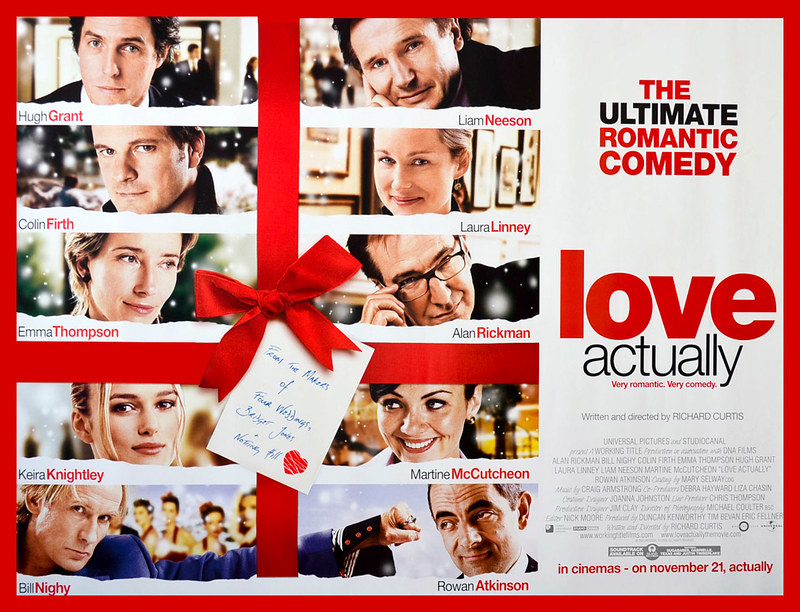
Unpopular Opinion: LOVE ACTUALLY Is Both Lovely AND Terrible

A debate I’ve often seen flare up during the holiday season is whether Love Actually (2003) is a good movie. It seems people tend to fall in one of two camps: love it or hate it. I only recently watched the film for the first time a few years ago, after warring factions of my family wanted to know which side of the debate I’d fall on. Upon that first viewing, I primarily felt underwhelmed. I’d expected to feel confident in standing on one side of the line or the other, without a middle ground being possible. After all, I’d been hearing this impassioned back-and-forth from my loved ones for quite some time: “It’s fantastic! We watch it every year!” answered swiftly by, “It’s ridiculous! The characters are horrible people!”

Well, which is it? Unsatisfied by my earlier reaction (or lack thereof), I decided to watch it again this December and see if I felt something different, one way or the other.

I’m here to tell you today, with confidence, that both groups are correct. Love Actually is both lovely and terrible.

Spoiler alert for all that follows, in case you are, like I was, nearly 20 years late in seeing this film.

I took three pages of notes as I watched (nerd alert). I attempted to distinguish my notes as pros (with plus signs) and cons (with minus signs) as I accumulated them, but the two often overlapped or cancelled each other out in such striking ways that that very effort pointed me toward my conclusion early on, and it only proved increasingly true.

The IMDB description of the movie reads, “Follows the lives of eight very different couples in dealing with their love lives in various loosely interrelated tales all set during a frantic month before Christmas in London, England.”

It says a lot about this movie’s intertwined “pro” and “con” lists that my initial reaction to that description, even after having just watched the movie, was “Eight?!” As in, That’s a lot. But then I started counting and quickly came up with more than eight*. If I can’t even tell who counts as a couple whose lives viewers are following, the plot and cast may be a bit overcrowded.

The movie opens with a promising premise: “If you look for it, I’ve got a sneaky feeling you’ll find that love actually is all around,” Hugh Grant says in a voiceover. (I assume that’s supposed to be Grant as his character, David, the prime minister, although he does not return as any sort of narrative voice, nor as any more of a leading character compared to the many others.) This premise is illustrated in several effective ways throughout the movie: Daniel (Liam Neeson) and Sam (Thomas Brodie-Sangster) navigating their grief over the death of Sam’s mother and bonding over Sam’s crush on his classmate; Jamie (Colin Firth) and Aurelia (Lúcia Moniz) finding ways to communicate across their language barrier; and the charming, if somewhat unconventional, chemistry between David and his staff member Natalie (Martine McCutcheon), whose face glows whenever they interact.

It seems that many of the movie’s other storylines are working against that heartwarming premise, though: Colin (Kris Marshall)’s sole personality trait is that he has an urge to get laid, he believes he can achieve this by going to the United States, and it’s then proven true with such an over-the-top turn in his luck that we’re waiting for a punchline that doesn’t arrive; the US president (a particularly dirtbaggish Billy Bob Thornton) hits on / sexually harasses Natalie; and she then feels the need to apologize to David about it, both in her Christmas card and in person. And whom or what am I supposed to be rooting for when Harry (Alan Rickman), who is married to Karen (the incomparable Emma Thompson), is hit on for the umpteenth time by his sexually aggressive assistant? Do any of these really serve to demonstrate love being all around us? Attraction, maybe, or the complexities of relationships or of finding our way. These examples seem out of sync with the other storylines.

When it seems like viewers are meant to care so much for Karen, it’s a fair expectation that we should be building toward her triumph after she finds out about the necklace Harry purchased for the other woman. Instead, we get a (highly effective) scene of her allowing herself a brief cry in her bedroom before rejoining the family for the Christmas concert, another (also highly effective) scene in which she briefly gets to tell Harry off after the concert but then stops herself when the kids come back in, and then a flash-forward at the end of her greeting him at the airport with the kids in tow, their dialogue so stilted that it not only implies continued tension between them but leaves me lost as to whether they’re still together. (I think they are?! Even after her powerful line about “knowing life would always be a little bit worse.”)

Likewise, we’re rooting for Sarah (Laura Linney) to finally get with her office crush, Karl (Rodrigo Santoro), and the momentum builds adorably in that direction. When he comes over to her place, we get two of my favorite moments in quick succession: her happy dance in the stairwell, fists shaking in the air, while Karl stands waiting just on the other side of the wall, and subsequently her attempt to quickly throw her bedroom clutter into hiding, including, guiltily, her teddy bear. But then her cell phone rings, as it so often does, and interrupts their rendezvous; the obligations of her normal life take over (she’s a caregiver for her brother); and she never gets to return to the sweeping romance.

What’s the moral of storylines like Karen’s and Sarah’s? That sometimes life gets in the way of love? That sometimes you’re stuck settling for your “have to”s rather than aspiring for your “want to”s? This may be accurate to many people’s lived experiences, but the tone feels out of place in this movie. At least Sarah’s storyline demonstrates a different kind of love, the bond and instinctive caregiving among biological family. But it’s still terribly depressing. Yes, “life is full of interruptions and complications,” as Karl reassures Sarah, but are we supposed to take from this that sometimes the interruptions and complications win? Does Sarah have zero agency to carve out some bit of time for her own needs and wants? (And, seriously, she has the most obnoxious and unnecessarily loud ringtone of all time, amiright?)

There are so many utterly delightful moments throughout this movie:

  • My favorite: Natalie’s family heading out for the Christmas concert just as David arrives to profess his love. This leads to the couple sitting in the backseat of a car on either side of an impeccably straight-faced child dressed as an octopus, who interrupts their heartfelt conversation by proclaiming “We’re here!” and then exits the car in an endless crinkle of tentacles. (Bonus content: His character in the IMDB cast listing is named Natalie’s Octopus Brother.) This scene is so well written and delivered (“Keith will be very disappointed. …Eight is a lot of legs, David”) that I rewatched it several times and giggled out loud each time, on an airplane.
  • David’s dance montage, a joyful 40 seconds of total commitment that make him a more likeable and relatable character.
  • The flourish with which the jewelry store clerk (Rowan Atkinson) tackles each elaborate step of the gift-wrapping process, complete with spoonfuls of flower petals and a sprig of holly.
  • The crowd following Jamie through the town as he goes to find Aurelia, and his bumbling attempts at Portuguese as he declares his love for her. This is the good kind of ridiculousness that rom-com fans expect – heartfelt, endearing, and worthy of rooting for.
  • The earnestness of Sam’s crush, which he is adamant is true love (“the total agony of being in love”). Didn’t we all feel this way at some point about a childhood crush, that it certainly would stand the test of time, that our hearts and minds were clear on what we needed? “Another thing about romance is people only get together right at the very end,” Sam tells Daniel, reassuring them both that they can hold onto hope. Perhaps it’s largely because Brodie-Sangster’s massive brown eyes pierce right to the heart (does anyone else remember him, later, from Game of Thrones and thus get a thrill out of his appearance here as such an endearing baybay?), but I love his entire storyline, including learning the drums to impress his crush, his hand on the glass of the airport window as he tries desperately to call to her (“Joanna!”) (slight point deduction here for expecting us to believe that a boy could run so far through an airport in a post-9/11 world), the smile that encompasses his whole face after she kisses him. This is pure, joyful, not-yet-jaded-by-the-world love.

Likewise, there are so many utterly awful ones:

  • Karen telling a crying Daniel, “Get a grip. People hate sissies. No one’s ever gonna shag you if you cry all the time.” Is this supposed to be…funny? His wife just died. He’s worried about his stepson. It falls flat, at best, and makes an otherwise likeable Karen much less appealing.
  • Harry’s assistant wearing devil horns to the office’s Christmas party. I just can’t.
  • Don’t even get me started on the creepiness and poor execution of the crush that Mark (Andrew Lincoln, looking startlingly babyfaced for those of us used to seeing him on The Walking Dead) has on Juliet (Keira Knightley), newly married to Mark’s friend Peter (Chiwetel Ejiofor), who shows up so briefly we don’t even get a chance to decide if we care about him at all. The cue-cards scene has been parodied so many times not because it’s cute but because it’s AWKWARD AS HELL. As is his entire attraction toward her. He’s always swinging around that video camera, then somehow later has a professionally edited montage of close-ups and slow-mo pans of Juliet’s face. He wants the crush to remain a secret and tells Juliet he doesn’t know where the wedding video is, yet he puts the VHS tape, clearly labeled, right on his living room shelf.

The movie tries to cover so much ground that, at this point in this lengthy blog, I haven’t even touched on a couple of the other storylines, which I’ll reduce to brief notes here:

Billy Mack (Bill Nighy) is obnoxious but mostly in a good way, and I like that he acknowledges the ridiculousness of reworking the former hit song “Love Is All Around” into “Christmas Is All Around,” thus also highlighting the commercialization of Christmas and the pressures of fame. This storyline is uneven and rushed (we very briefly learn at the end that perhaps there’s a romantic interest between Billy and his manager?! more of that, please!), but, all told, it’s in my “pro” column.

John (Martin Freeman, who I loved on the British version of The Office) and Judy (Joanna Page) are adorable as body doubles for movie sex scenes, finding they can chat comfortably and develop a trusting rapport in the midst of some hilariously awkward physical arrangements. Their shy self-consciousness is an amusing contrast to the work they do, and together it makes for an inviting vulnerability. And his leap off her front steps after they kiss is pure joy.

In total, the movie’s core is weakened by trying to do too much. Following so many characters makes it hard to keep them straight or to feel invested in them. Give me a remake that reduces the fluff (the Colin storyline and the Mark-Peter-Juliet storyline could be cut entirely) and delves deeper into the cursory storylines that have such potential (does Karen strike out on her own? does Sarah get another chance with Karl? how does Daniel and Sam’s relationship evolve as Sam grows up?). Or give me an entirely separate rom-com about Jamie and Aurelia or John and Judy. The bigger, clunky effort does a disservice to so many promising pieces that are reduced to glimmers among the crowd.


(*More than eight couples: David and Natalie, Jamie and Aurelia, Harry and Karen, Harry and his assistant, Sarah and Karl, Sam and Joanna, Mark and Juliet, technically speaking Peter and Juliet, Colin and his group pursuit, John and Judy, Billy Mack and his manager, plus the familial relationships between Daniel and Sam and Sarah and her brother.)

LOVE ACTUALLY movie poster
Photo obtained from Ron Cogswell, downloaded from Flickr; some rights reserved

A Dream in Which I Tell Myself “I Would Do Anything for You”

I keep thinking about a dream I had several months ago. It was brief and blurry, but one element has remained persistently clear: I was sitting across from myself [a clone? A reflection? That part I’m not sure of, but there were two distinct yet identical presences of me], and the self that I embodied said to the other, reassuringly, matter-of-factly, “I would do anything for you.”

The caring was instinctive, deeply rooted, the way I feel in my waking hours about my boyfriend, my family, and my dearest friends — a level of protectiveness and pride I feel especially about my nieces and nephews: I don’t want anything bad to happen to you. You are strong and beautiful and talented. I believe in you. I’m here for you anytime. I love you beyond words.

Why don’t I treat myself that way?

Well, a couple months ago, several weeks after having had that dream and having it echo in my mind since, my self-care and -compassion were put to the test.

In one simple misstep, I slipped and fell in the yard, landing with one leg curled awkwardly beneath me and my foot bearing the weight of the rest of me collapsing. I’ve replayed that moment countless times since, as if I could retroactively change my footwear or my armload of stuff or whatever it was I stepped on that caused my foot to slip, and each time I’m struck by the notion that I had no idea in that instant how it would ripple out to affect the entire trajectory of my summer and my physical and mental health.

I don’t intend this to be a pity party nor to belabor the details, so I’ll give the abridged version:

  • The sprained foot led to a blood clot in my leg, which has continued to cause periods of swelling and discomfort as well as send my anxiety and depression on a seemingly endless roller coaster.
  • The prescribed blood thinner required me to stop taking another medication that had long been very helpful for me and left me scrambling for an alternative, none of which have proven satisfactory.
  • It was a hot summer to have one leg encased in a boot brace — although that brace has been a godsend in allowing me much better mobility than I had for the first few days, during which I couldn’t put weight on the foot without intolerable pain.
  • This whole experience has been an eye-opener as to how many elements of my typical day are not easily accessible, with any stairs, gravel, or hills leaving me unsteady at best and at times incapable of navigating without help. That is to say it’s opened my eyes to how very much I was taking for granted before.

The dream was not a stretch in that I have long been one to talk to myself — even out loud, even in public — but this too has now been manifesting in new, gentler ways: “We’ve got this,” I’ll say to myself. [We?! As if, again, there are two of us in the conversation!] “Okay, here we go. One step at a time.” I am aware that I am someone in need of caring and more willing to give myself that care than probably ever before. As I step slowly in and out of the shower or turn gingerly to rinse my hair, as I stretch my cramped-up calf muscle, as I climb into bed and appreciate the shedding of a long day, I am carrying myself differently, with more awareness, patience, and forgiveness.

While I wish it hadn’t taken an injury for this slowing-down to happen and I’m eager to start feeling more like myself again, I hope that as I continue to heal I can maintain this new perspective.

And I wish it for all of you, too — without the dramatic catalyst! Let’s adopt an attitude of showing up for ourselves. We need it more than we may realize.

Photo by Hassan OUAJBIR, downloaded from Pexels

Wishing You Anger and Inspiration

My debut book is out(!) — and its content packs a punch. A story like this may upset you or inspire you. I hope it will do both.

The Man Behind the Curtain is a memoir I coauthored for a survivor of sexual abuse whose family and community tried to silence her when the truth came out. As I’ve blogged about before — in introducing you to Jessica and in interviewing her as we neared the finish line — there’s no denying that this is difficult subject matter, and that’s precisely why we felt it needed to be heard.

For too many years, Jessica was the one made to feel guilty about what had been done to her, including feeling guilty if she tried to talk about it — even long after the abuse had been reported and investigated, even long after her rapist stepfather was convicted and imprisoned. The people who continue (yes, present tense) to revere her abuser and portray Jessica as a liar have made grand attempts to shame her into continued silence. As I write about in the book’s afterword, Jessica told me in one of our early meetings, “Every time I tell my story, I apologize for my story.”

This is maddening. Jessica knew it wasn’t right but had to wrestle with that for years, often alone. I knew it wasn’t right upon my first meeting with her, scribbling down page after page of notes by hand as the earliest notion of a book took shape. Now our readers are experiencing that fury, too — and I must say, I love to hear that.

“I was so enraged I wanted to throw the book across the room on multiple occasions,” wrote one reviewer. Another wrote, “This book will make you angry. And it should. A brutally honest depiction of the abuse that a young girl faced, and the heartbreaking account of those closest to her who refused to believe it.”

I want you to feel angry. I also want you to feel proud of Jessica, as I do and as so many readers have told us they do, and cheer for her as she finds her courage and her voice amidst all of those causes of anger.

And I want you to know that Jessica’s story, as shocking and infuriating as it is, is not unique. I want you to be all the angrier to think about the countless others who have lived a story like this or are currently living it. And I want you to be all the more inspired and hopeful and proud to think about each one of those people stepping into their own power. Jessica and I hope that a book like ours helps them, and their loved ones, along that journey. As we write in the book’s last chapter, we’re aiming to “help others take their own first step — or second, or hundredth — toward healing, and toward hope.”

Michelle Bowdler’s memoir, Is Rape a Crime? A Memoir, an Investigation, and a Manifesto, served as a torch guiding my way through my research and writing. In an essay she wrote for Lit Hub, “When Your Memoir Has the Word ‘Rape’ in the Title,” Michelle addresses a struggle similar to Jessica’s: “The temptation to hide the word because the reality of rape is so horrific only made it more critical that it stood front and center in my book. As it was in my life, it would be in my words. If I hid the word rape and its impact on me, it would make anything about my life a lie, an omission, a nod to shame and silence.”

In working to suppress the shame and self-doubt, people like Michelle and Jessica used something terrible as a catalyst for something great, providing a guiding light to other survivors who are still trying to find their way through.

I see a similar light emerging from the darkness when I watch a woman address her church about the abuse their pastor inflicted upon her as a teen, or when I read about the reckoning currently unfolding for the Southern Baptist Convention — which encompasses Jessica’s family’s church — about sexual abuse from the highest ranks, covered up for decades by its executive committee. When I hear these stories, I am simultaneously furious and hopeful, with each emotion amplifying the other. I’m honored if our book can evoke a similar cycle of feelings for our readers.

Yes, the things Jessica experienced can be difficult to hear about. The fact that she and too many other people have lived those difficult things makes it imperative that others of us are willing to hear about them and discuss them. We may not always understand or know what to say. We may feel powerless in response to such horrible things. But we can listen. That seemingly simple action holds a lot of power.

In listening, we acknowledge the victim as a fellow human being with a story bigger than their abuse, with a life still to be made. We bear witness, we learn, we grow.

Another reviewer of our book wrote, “This is admittedly a tough read from an emotional standpoint, but it is well worth the pain to read how Jessica persevered.”

Jessica and I are both so grateful to our readers for being willing to take this emotional journey with us. Collectively, we come out the other side of it stronger. I hope continuing to share stories like this helps us find a way forward, toward a time when there are far fewer of them to tell.

Instagram quote card showcasing a reader review of THE MAN BEHIND THE CURTAIN: "I was so enraged I wanted to throw the book across the room on multiple occasions..."

A Letter to My Nieces and Nephews, Growing Up in the COVID Era

Dear D, L, C, and E,

Sometimes I feel sad or angry that these past 19 months (and counting) of your childhood have been so heavily shaped by the COVID-19 pandemic. I do very often feel both sad and angry about all the time I’m missing out on with you and restless to get to the end of this difficult stretch so that I can be with you much, much more.

I recently found myself thinking of this strange time we’re in as “the lost years”: we’re missing out on so much, with plans continually cancelled, postponed, or dialed back. Again and again, we say “hopefully soon” or “maybe next year,” even though we’ve been taught to live in the present and not take a day for granted. So many things are on hold and uncertain, and it’s easy to feel frustrated, tired, and scared.

But then I get to see you or talk to you and am reminded that these years, these days, are not lost. You are continuing to grow, learn, laugh, and find joy throughout it all. You continue to give and inspire love so powerful, so unconditional, that I’m humbled to be a part of it. And you remind me that that’s what we should all be aiming for, always.

There is so much changing around you all the time, and yet you continue to roll with it and accept it. You understood when birthday parties had to be held by Zoom and dance classes had to be (still have to be) held with 6-foot squares taped out on the floor. You adapted to remote learning, and now you’re navigating being in school in person with so many added safety precautions and restrictions. You wear your masks without question and try hard to remember to keep safe social distances. You are much better about these things than many adults. You understand the big differences that little actions can make.

You run around playfully with your masks on. You give masked hugs or air hugs and say “I love you” on video calls. You ask me what kind of hand sanitizer we just used because “it’s a good one.” You make a game of changing your facial expressions, with exaggerated eyes, and seeing if I can guess whether you’re smiling behind your mask.

You tell me about the video game you’re playing, or the clubs and activities you’re starting, or the friends you’re making, or the boy in your class you think is cute, and the world feels normal again. You remind me of all the good there is in every day, and you remind me that I don’t want to lose sight of any of it.

You have more wisdom and clarity in your 9, 7, and 4 years than many of us have managed to acquire in decades. Given all that you’ve accomplished during these restrictive times, I can only begin to imagine all that you’ll achieve and inspire in others as the world continues to open its boundless self back up to you. Thank you for helping me to remember what matters and what’s good.

I love you more than words can ever say.

Love,
Vovo

The Trapper Keeper Is BACK and as Mint as the ’80s Original

The return of the Trapper Keeper combines several of my favorite things: writing, office supplies, organization, and nostalgia. I had a Trapper Keeper in elementary school that I assume was originally used for in-class purposes, but I remember it best as my first at-home creative writing notebook / folio, using each folder within it to safeguard a separate work in progress — all written out by hand, of course. This love affair started before we had a computer at home, and then the comfortable routine of drafting on the built-in clipboard and filing away the accumulating pages continued for years afterward.

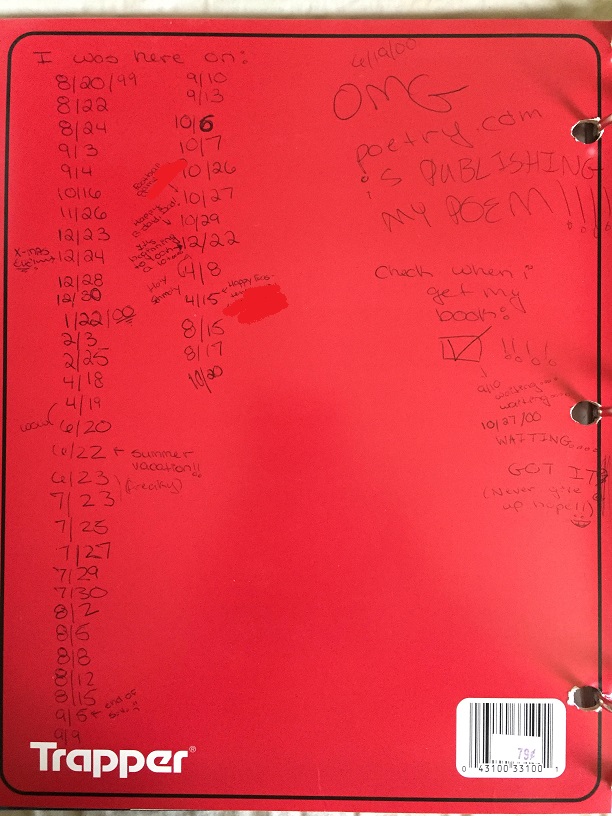
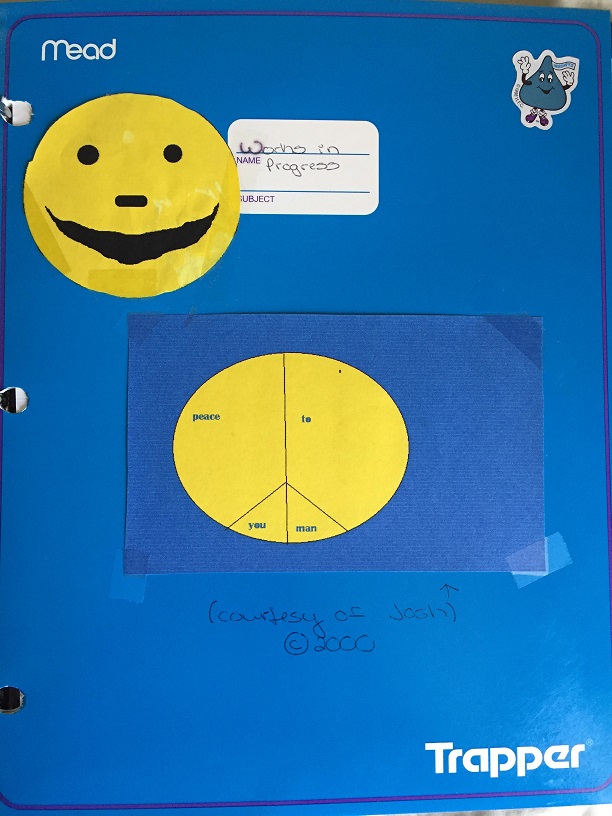
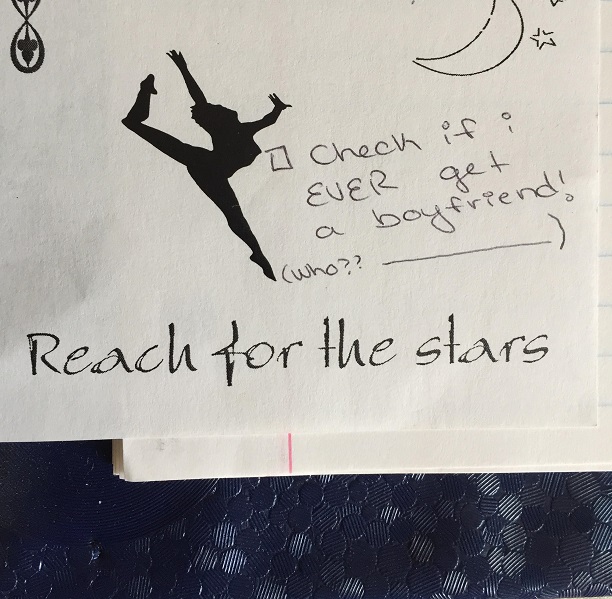
My Trapper Keeper evolved as I did, its folders adorned with stickers and scribbled with the names of crushes that came and went. I doodled and wrote notes to myself (sometimes to my future self) on just about every usable surface area, including along the inner spine and on the cardboard cover beneath the plastic that gradually peeled away from it over the years. While mulling over ideas, or when feeling what I now know to call anxious, I would pick at that plastic backing or run my pen along the ridges of its design, the swirls and lines quickly becoming familiar, well-worn paths covered in ink.

Instagram post from actress Elizabeth Berkley promoting Trapper Keeper's relaunch

When I saw this recent Instagram post from Elizabeth Berkley promoting the Trapper Keeper’s relaunch, I was indeed “so excited” (and appreciative of her excellent hashtag use, as any Saved by the Bell fan will understand), and I soon zipped over to my local Walmart to snag one. The excitement built as I searched the back-to-school aisles for the right section, hoping they’d still be in stock. I’m not ashamed to admit that, once I found them, I let out a little eeee! from behind my mask. They were there, they were real, and they were beautiful!

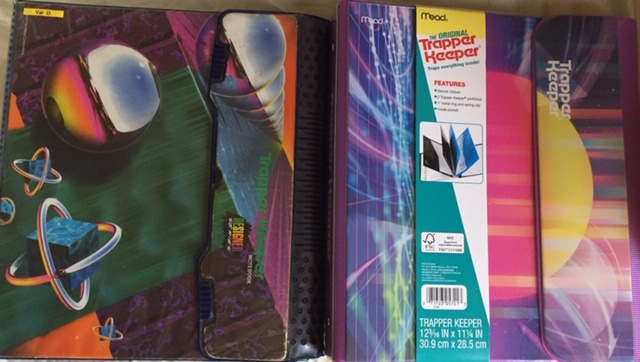
I was thrilled to find that Mead stayed true to the product’s roots and kept all the essentials — the front interior pocket, with holes that help you see what’s inside and also are addictive to trace; a couple of folders in the 3-ring binder; the clipboard hinge in the back; the Velcro flap closure — and even the aesthetic of the designs. The Trapper Keeper has aged well. It’s an effective homage to the original while also a practical purchase for current use. (That’s not just what I told myself while justifying its $9.97 price tag.)

I hope it goes without saying that this is not any sort of official advertisement or sponsored post. I’m not big-leagues enough for that. I just really, really love this product.

Just a couple years ago, I had wanted to get my nephew something for Christmas that would help organize his many writings and drawings and was dismayed to find that Trapper Keepers were no longer around. It would have been perfect! I searched several places for something similar and came up short. There are semi-comparable products aimed at professionals, portfolios that snap or zip shut, but they fall far short of the whimsy of the Trapper Keeper.

Maybe it is largely because I’m a sucker for nostalgia, but the product’s entire design really feels like something special. There’s an important interplay between the colorful prints, the satisfying ripping-open of the Velcro, and the way everything stays tucked neatly inside. Creativity seems inherent in this product. It encourages kids (and adults!) to imagine, explore, brainstorm, and make the abstract concrete. To return to their ideas and build upon them. To believe that they have ideas worth returning to.

I’ve kept my old one around for all these years as a time capsule of sorts, commemorating my early writing days and the sense of boundless purpose and potential they held. I’d occasionally thought about using it again, but I didn’t feel right about disturbing its state, starting a new chapter of use after so many dormant years.

Now, instead, I can start this new chapter in its own cozy enclosure. I’m excited to see what purpose and potential it helps me discover.

  • My old and new Trapper Keepers, side by side
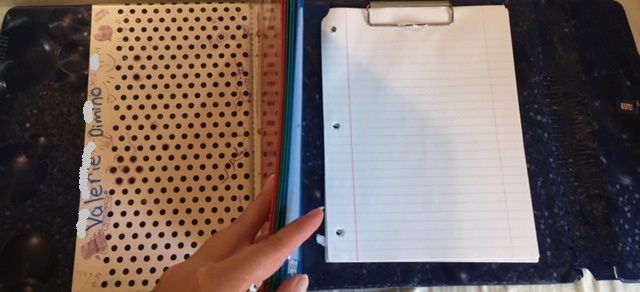
  • Quick inside look at my old Trapper Keeper
  • Quick inside look at my new Trapper Keeper
  • Doodle of the word "puppy" in my old Trapper Keeper
  • Notes to myself on the back of a folder in my old Trapper Keeper
  • Stickers on a folder in my old Trapper Keeper
  • Brainstorming characters' names on a folder in my old Trapper Keeper
  • Price sticker from the Ben Franklin store on a folder in my old Trapper Keeper
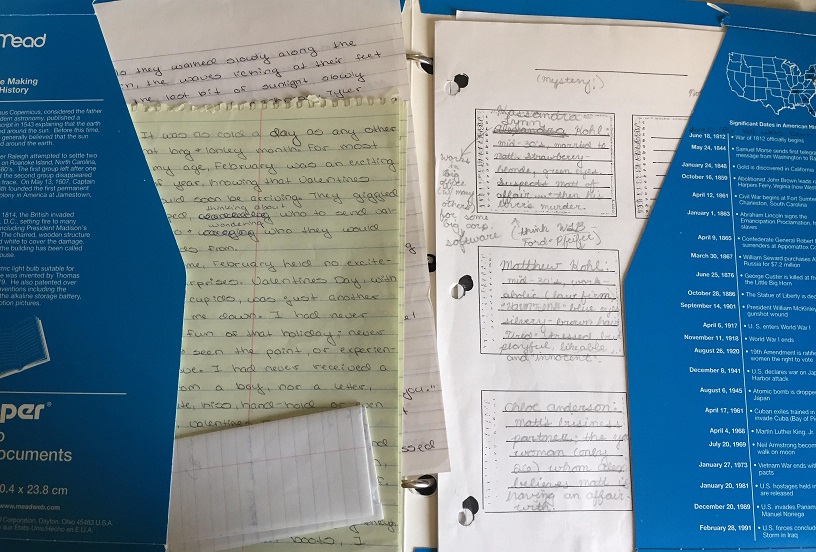
  • A folder in my old Trapper Keeper stuffed with drafts and notes
  • I added my birthdate to the list of significant dates in American history on a folder in my old Trapper Keeper
  • Doodle of "I [heart] 'NYSNC" in my old Trapper Keeper
  • Note to my future self in my old Trapper Keeper: "Check if I EVER get a boyfriend!"
  • Doodles beneath the plastic backing in my old Trapper Keeper