Penny in Paris, Grandpa in Grotte

Up until this past December, I had never traveled out of the country other than to various areas of Canada — which, as a Western New Yorker, is nearby enough to hardly feel like a change of territory. 

I’m blessed that my fiancé, Rich, values traveling and that we have the means to do so. Regardless of your travel inclinations or abilities, I hope you can gain some inspiration from what I share here, whether it’s about taking the trip of a lifetime, exploring your own neighborhood through a new lens, or honoring your family roots in a creative way. 

In December, Rich and I went to London and Paris, and we recently returned from a trip to Italy. I have so much to say about both trips, and I hope to write more soon with a broader overview, but first I have to process my thoughts on what were easily some of the most impactful moments of these trips, both involving symbolic gestures to honor family. Emotions will ensue.

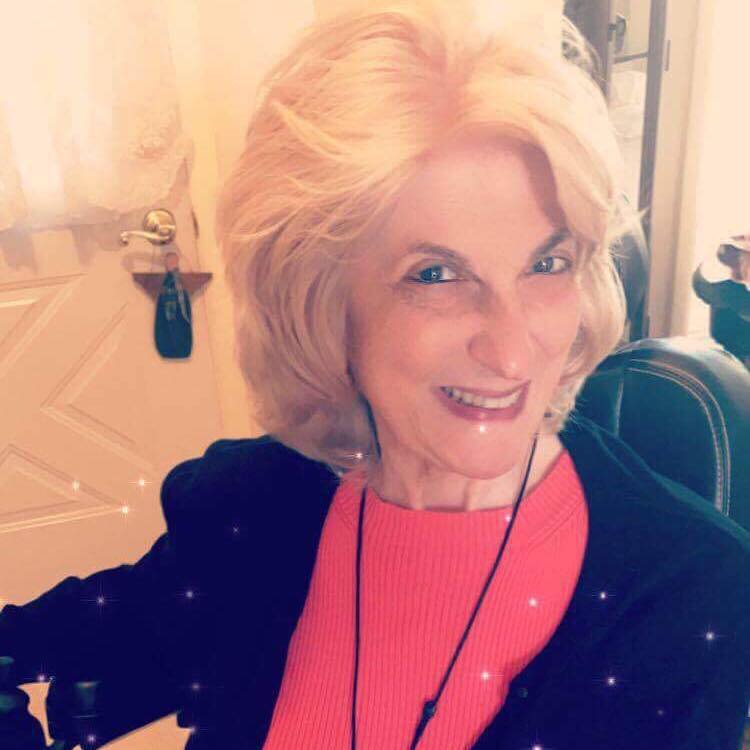
Hat-tip to my Aunt Jeneane, my dad’s sister, for the inspiration behind this project. After learning that I’d be traveling to Paris, she wrote to tell me that my great-aunt Penny (paternal aunt to my dad and his sisters) had always dreamed of going to Paris, describing the fabulous things she would see and do there. Aunt Penny was fabulous, through and through, from her brightly colored clothes to her extravagant accessories to the piano music and vocal melodies she could fill a room with at the drop of a hat. Thinking of her thinking of Paris made me smile. She would be such a natural there. 
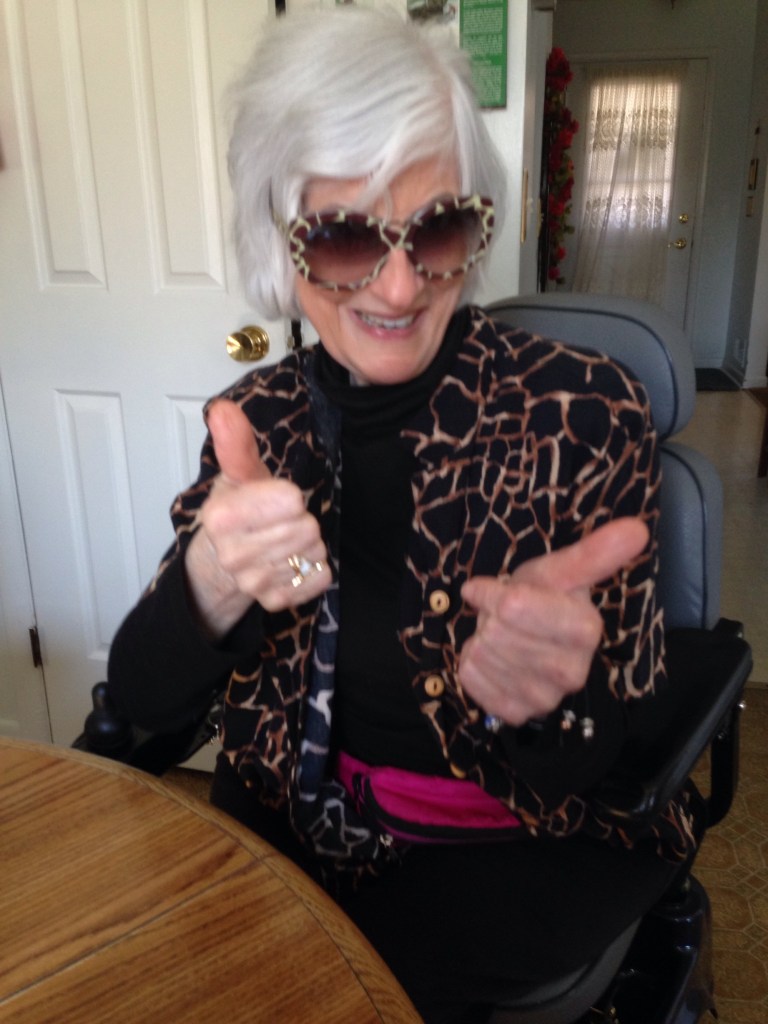
Aunt Penny passed away in 2020 before ever getting to make the trip. Aunt Jeneane asked if I might consider taking along with me something that reminded me of Aunt Penny and leaving it in Paris, so we could feel like she finally got to make that trip.

I was immediately on board and quickly knew exactly what I would take with me. Aunt Penny had quite a collection of Christmas jewelry, a large assortment of which came to me after she died. I love wearing her necklaces of tiny lights and her mini-ornament earrings during the holiday season. Given that we were traveling to Paris in December and it would be decked out in Christmas glory, I knew this was the perfect fit.

I chose four pieces from the collection, wrapped them carefully in tissue paper, and stowed them in a bag in my purse. As Rich and I strolled around Paris, taking in the twinkling lights, the smells of hot chocolate and mulled wine, and the decadent department store displays, we had such fun picking out precisely the right spots to leave an Aunt Penny trinket. I imagined her there beside me, her eyes gleaming as she took in the sights and sounds, exclaiming, “Oh, isn’t it wonderful?!”

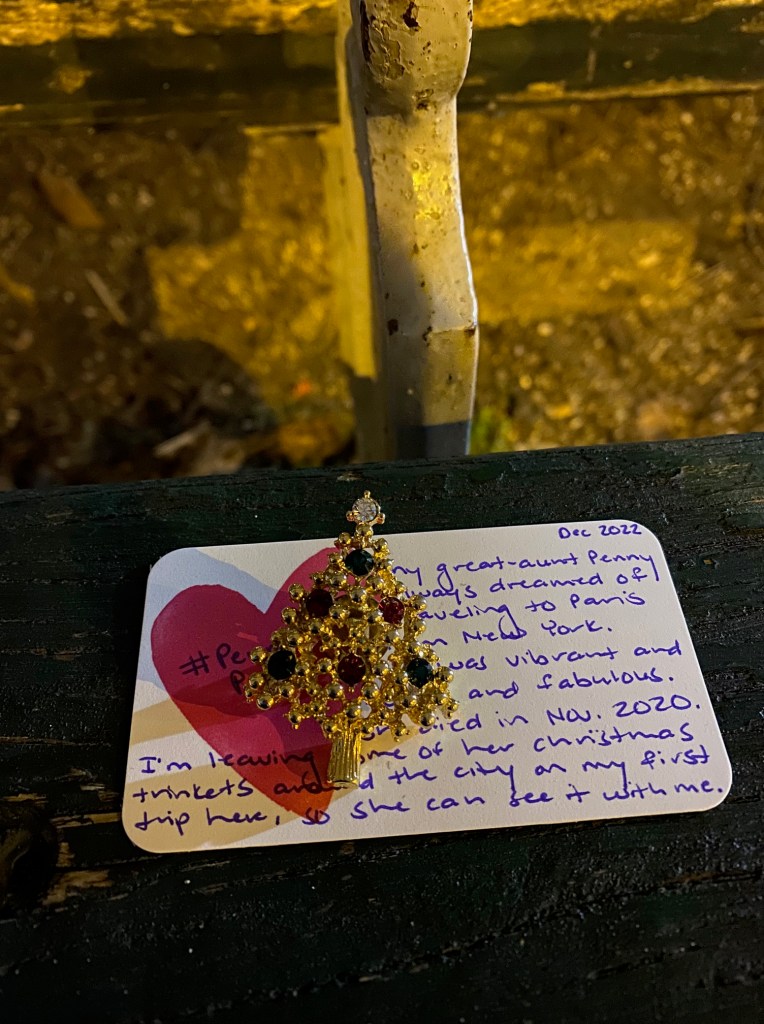
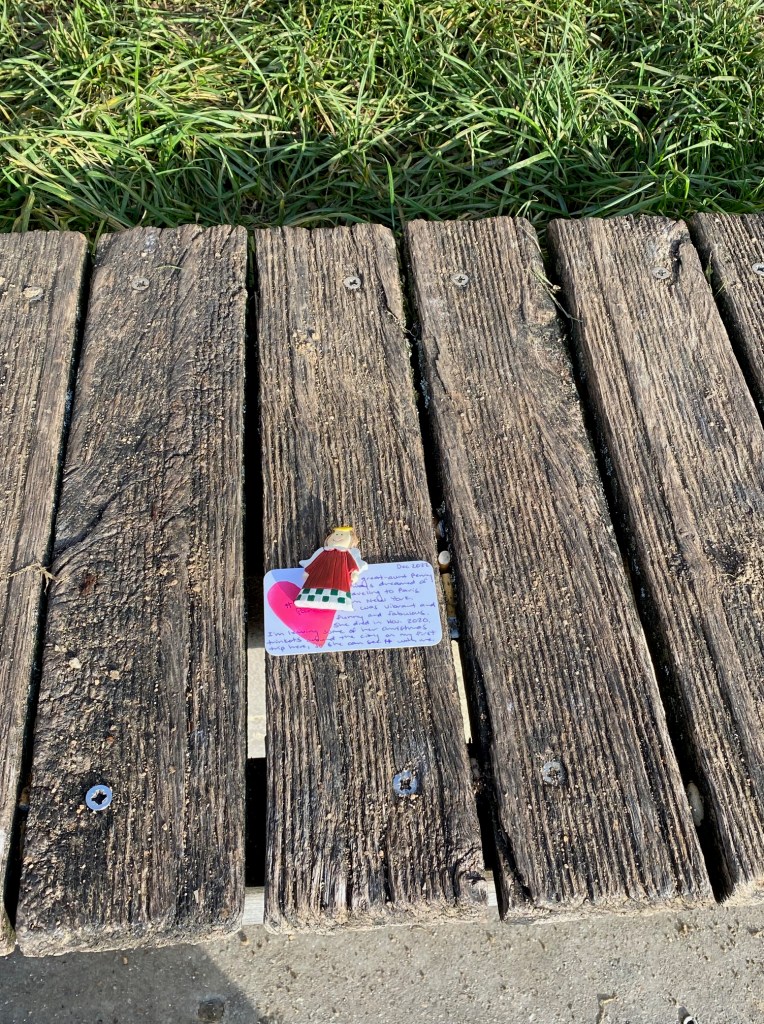
I didn’t feel quite right about leaving these sentimental objects by their lonesomes, so I wrote a little note to set with each one:

My great-aunt Penny always dreamed of traveling to Paris from New York. She was vibrant and funny and fabulous. She died in Nov. 2020. I’m leaving some of her Christmas trinkets around the city on my first trip here, so she can see it with me.

We placed a Christmas tree pin on the roof of the Galeries Lafayette department store, with a panoramic view of the city; another on a bench on the Champs-Élysées, lit up with row upon row of sparkling trees; an angel pin by a walking path along the Seine; and a jingle-bell bracelet in a park housing a Christmas market, with a view of Notre-Dame.

I included the hashtag #PennyinParis on the notes, and my Instagram and Twitter handle on the back, in the hopes of creating a sort of tracking to find out where the mementos ended up. I knew there were risks that the notes would be discarded, would never be seen, or would be difficult for a non-English-speaker to translate. (Only recently, upon the Italy trip, did I learn the wonders of Google Translate — what a gift!) 

Ultimately, it didn’t matter if I never heard from anyone — the point was that now it felt like Aunt Penny got to Paris

And then, about a week later, I heard from Tomi. 

He had found the card by the Seine, without its trinket, and messaged me on Instagram to let me know. He said he lives in a small village in northern France, that he’d found the card on a trip with his school class and was going to keep it on his bookcase. In our brief exchange, I could quickly tell that he understood the importance of Aunt Penny and this effort to honor her. “I really hope that she rests in peace,” he wrote. “I hope a part of her is in the card.”

This compassion was more than I had hoped for. I replied, “I believe there is a part of her in it and therefore now in your life.”

He agreed to give me his mailing address, and I sent him a couple other trinkets from the collection, a pin with Christmas beads dangling from it and a delicate string of mini imitation Christmas lights. On New Year’s Eve, I got a message that he’d received them and put them on his shelf with the card.

And so Aunt Penny continues to enjoy her Paris residency.

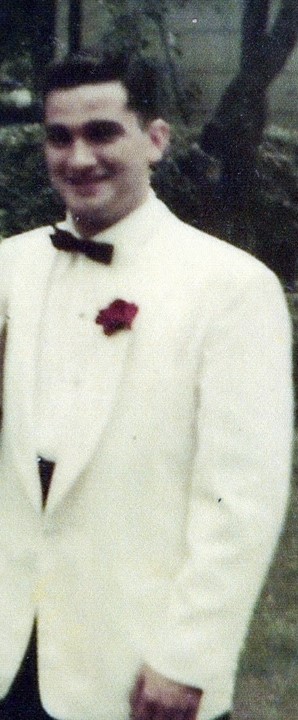
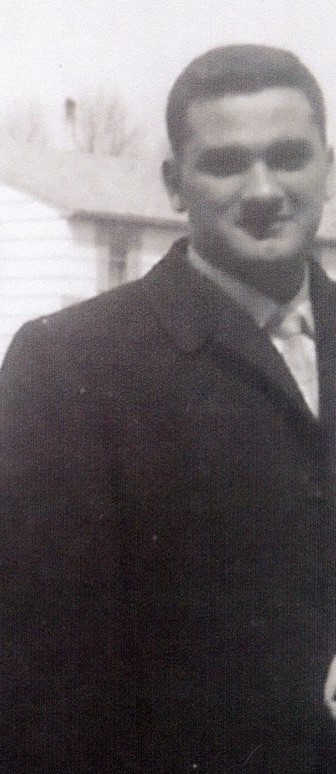
The guitar in the background of Tomi’s photo added a layer of emotional impact. I mentioned earlier Aunt Penny singing and playing the piano — my memories of her are wrapped warmly in music. There is a rich history of music on that side of the family. I’ve long heard stories of my great-grandmother’s house being filled regularly with family jam sessions, including my grandfather — my father’s father, Aunt Penny’s brother, Al — singing and playing the upright bass or guitar.

Which brings me to the next chapter of this adventure. 

A couple months ago, as my Italy trip neared, my dad asked if I might consider doing something similar to “Penny in Paris” on this trip, in honor of my grandpa. My dad is quiet-natured, cradling his emotions close to his chest but quick to sniffle when talking about his dad, who died of pancreatic cancer at the age of 38. My dad was 13 years old; his sisters were 15 and 6. Of course, I agreed immediately, feeling like I was being entrusted on a crucial quest. He gave me a tie clip and a set of cuff links that had belonged to my grandpa. 

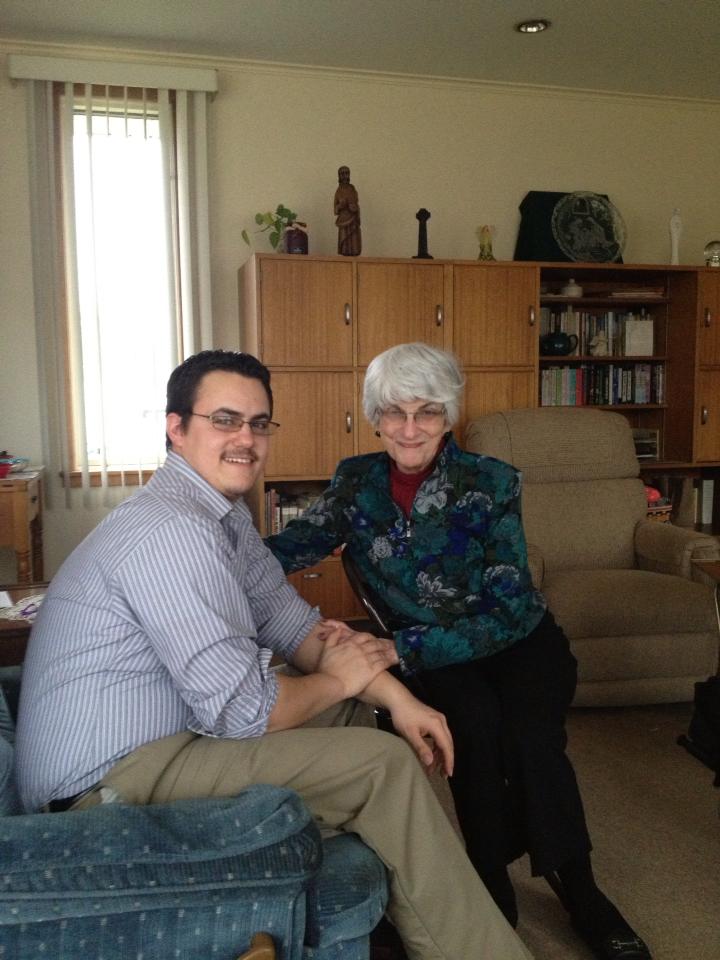
Since first starting to plan our trip, Rich and I knew that the focus would be on Sicily and that we had to include a day trip to Grotte, the small town in Agrigento where both of my paternal great-grandparents were born, from which they immigrated to the US as children. We would be traveling with Rich’s sister, Allison; her wife, Maria; their youngest child, Marcie; and Maria’s brother, Tony, all of whom I adore. I was so grateful that they understood the importance of this trip and the added weight and excitement of it in connecting with my homeland. 

Before leaving, I talked with my great-aunt Marian (sister to Grandpa Al and Aunt Penny) and my dad’s cousin Mary Kay, both of whom had traveled to Grotte years before. I wondered if there were specific street names I should look for or any known relatives still in the area. They both were so excited about my trip and encouraging about my plans to see Grotte, although neither could offer many specifics. Aunt Marian described the area as quiet, simple, and folksy, with people sitting around outside, the women talking and the men playing cards. She told me it was very hilly and that street signs might not easily be found. Mary Kay regaled me of her adventure there pre-cell phones, pre-Internet, making her way by phone book in pursuit of remaining relatives. 

I was not at all discouraged by their descriptions. I felt I now had a sense of what to expect, a vision building of this quiet, slow-paced town. And it didn’t matter to me whether I found any relatives currently living there — I just wanted to set foot on the soil, walk the streets my ancestors walked, and know that this is where we come from.

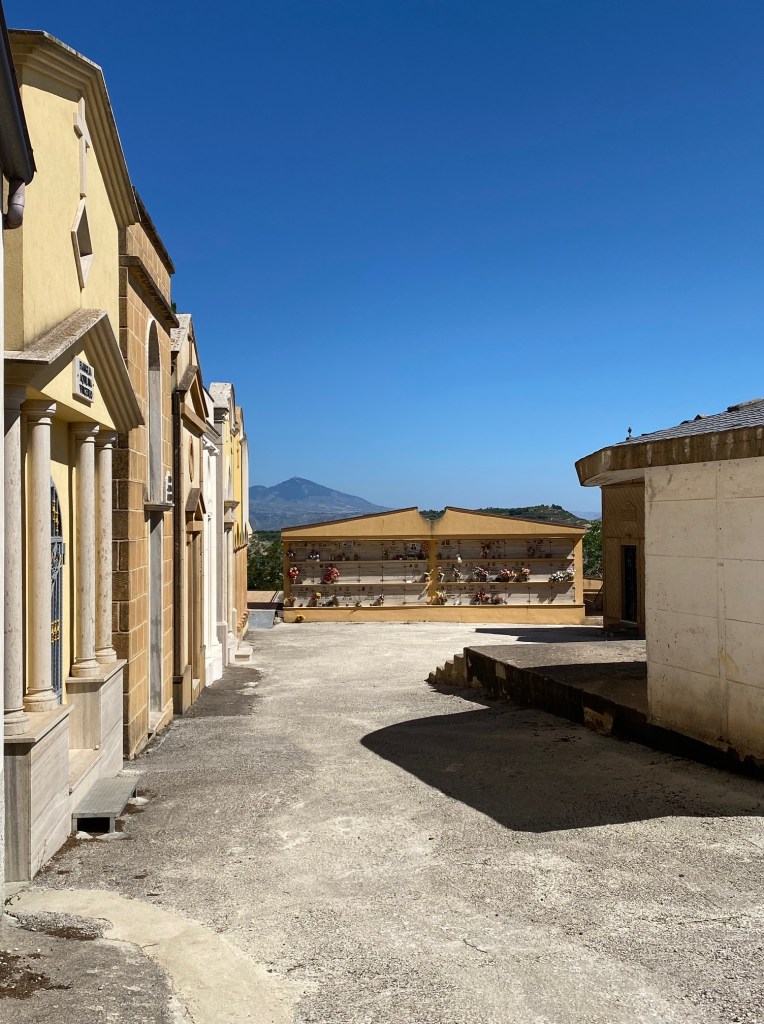
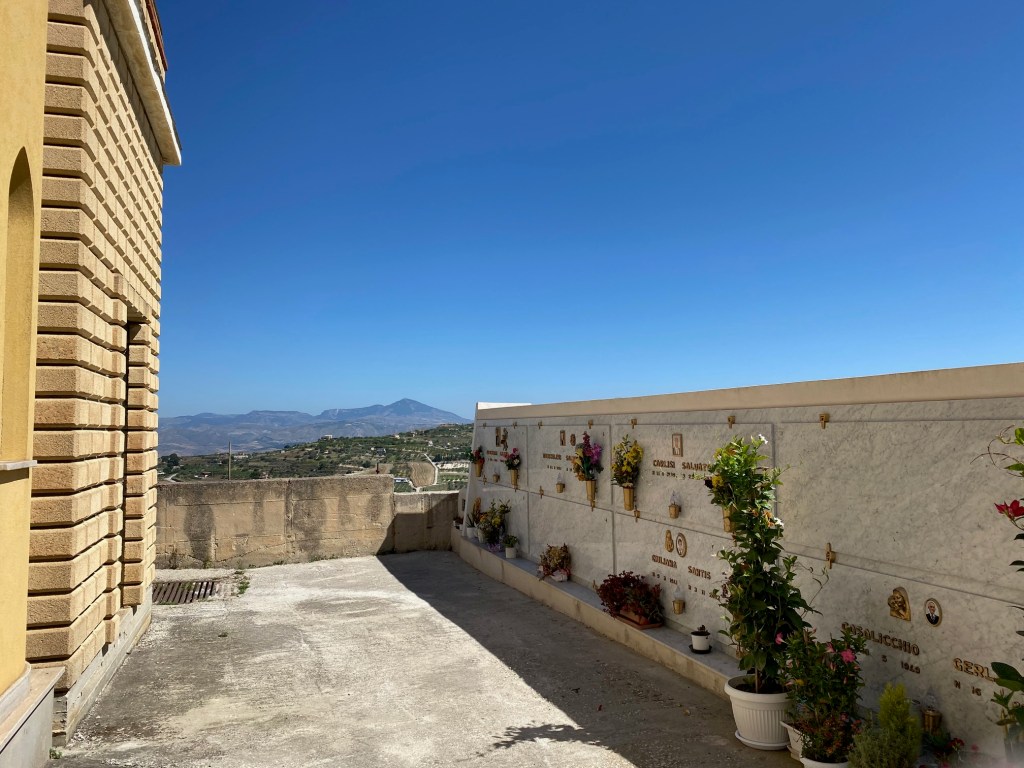
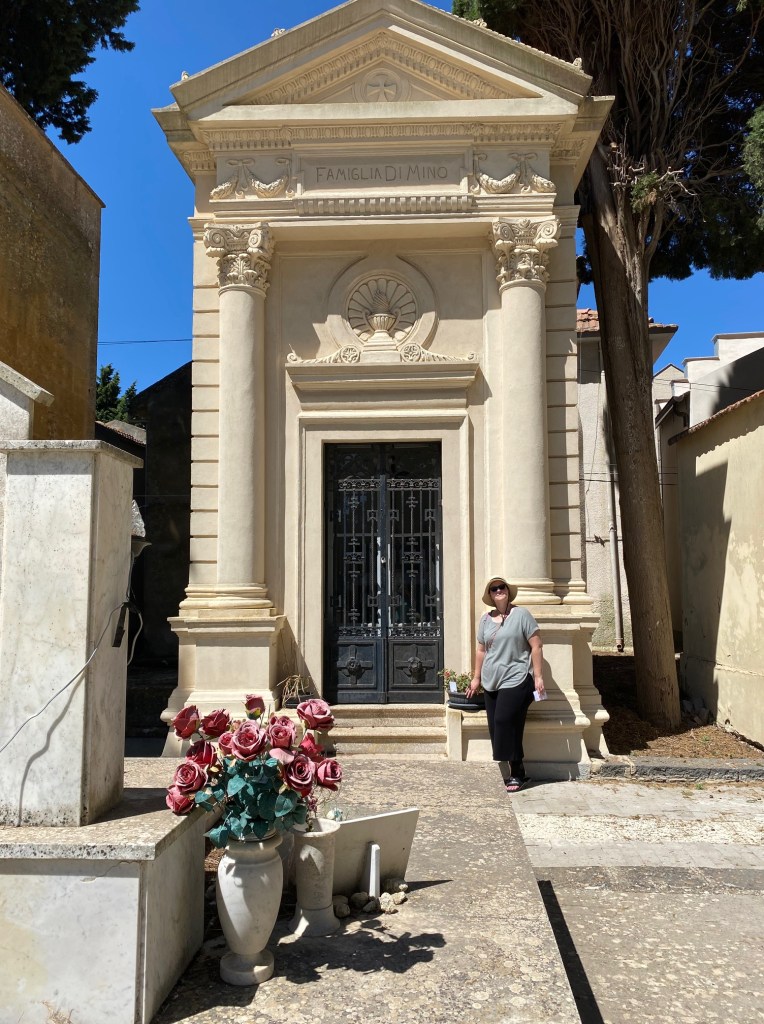
Our arrival in Grotte provided all of that and more. Thanks to the wise recommendation of a friend, we first visited the local cemetery, which I expected to be a tiny corner lot with centuries-old headstones in various states of disrepair. What we found instead was a seemingly endless sprawl of elaborate monuments, mausoleums, and engraved walls, many overflowing with fresh flowers. We could have spent a couple hours there and not seen everything.

Upon first walking in, we crossed paths with a few men working, whom I asked for permission to walk around. Using the aforementioned gift of Google Translate, I explained that my father’s family was from Grotte. They nodded and gestured, of course, come in, and asked about my family name. I mentioned not only Dimino but Valenti, my great-grandmother’s line, and one of the men smiled and pointed to a massive headstone just inside the entrance that bared the Valenti name.

We quickly found many more Valentis and Diminos as well as other names Rich had dutifully noted from his Ancestry DNA research on my behalf. We have a lot of research ahead of us to figure out which threads connect and where! It was such a thrill to walk around with that list of names, everyone taking pictures as they found matches and calling out to come see this or that. 
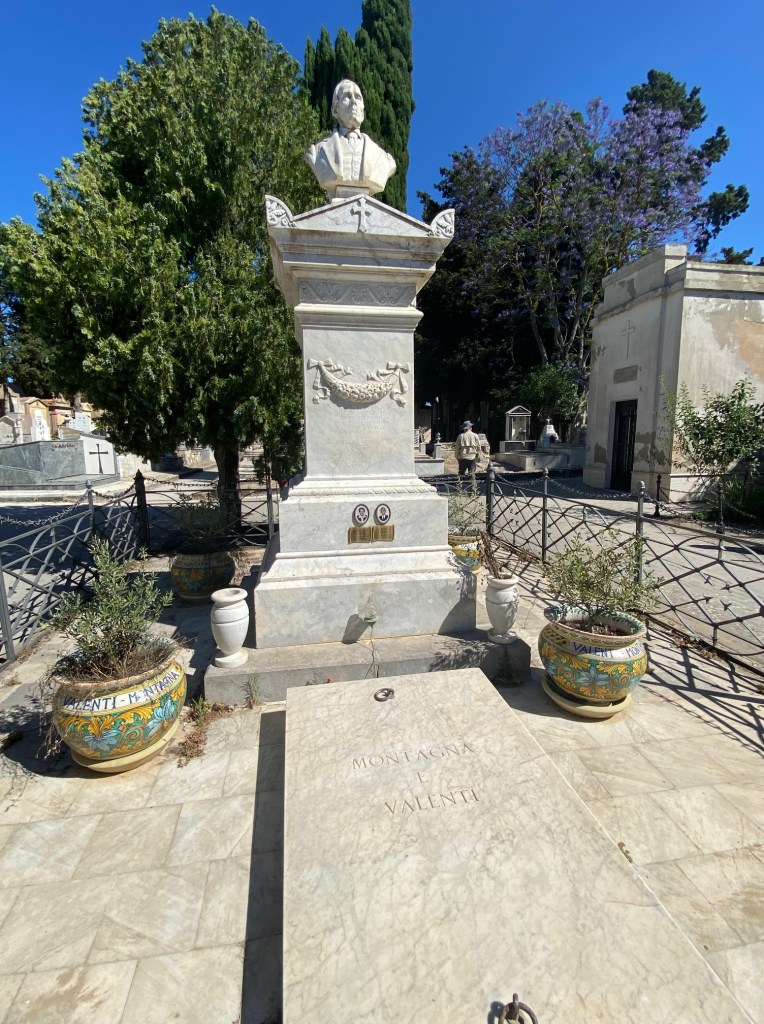
I was overwhelmed, in such wonderful ways.

The caretaker of the cemetery, an elegant and kind woman, spoke to me enthusiastically in Italian (thanks again, Google Translate!), trying to help ensure we could find what we were looking for. She seemed so deeply happy that we were there and trying to trace my roots, like I was being welcomed home by a stranger to a place I’d never been. She sent me off with a hug and a kiss.

I left the tie clip outside a Dimino family mausoleum, not sure (yet) if those Diminos are related but feeling like it appropriately honored the name’s presence in the area and the commemoration of those who have left us. 

Again, I wrote a note to accompany these trinkets:

My grandfather – my father’s father – Alphonse Dimino, was a child of two American immigrants from Grotte, Francesco and Carmella (Valenti) Dimino. Al was a powerful presence, handsome and charming, a talented musician, and a loving family man, who died far too young.

On this first trip of mine to Sicily, I am honored to leave a little piece of him here in our homeland.

#GrandpaInGrotte

We ventured on into the town, sipping cappuccinos at a corner café, watching the old men sitting around chatting and the women bustling around with canvas bags on their shoulders. The man who had pointed us to that first Valenti headstone in the cemetery drove by and waved. Again, I felt so welcomed, so understood.

I wasn’t sure yet where I wanted to leave my grandpa’s cuff links. I felt a bit of pressure building as I wondered how I’d know what spot in this little area would be the right one.

We strolled just a bit further, instinctively seeking some shade from a row of trees along a park-like stretch of sidewalk, lined with benches. And that’s when it felt precisely right.

Much like my visions of Aunt Penny enjoying the views from the benches of Paris, I imagined Grandpa Al sitting there on one of those Grotte benches, enjoying the shade and the breeze rustling through the trees. I looked out at the view he’d be seeing, of an inlaid stone street and buildings that had been there for centuries, and thought, This is the place.

Maria helped me roll the note up tightly so that we could slide it through the cuff links, hoping to ensure they wouldn’t get separated before someone found them. As I laid them down onto the bench, church bells rang out across the square. I was flooded with emotion, especially gratitude, in what felt like a cosmic moment between my grandfather and me.

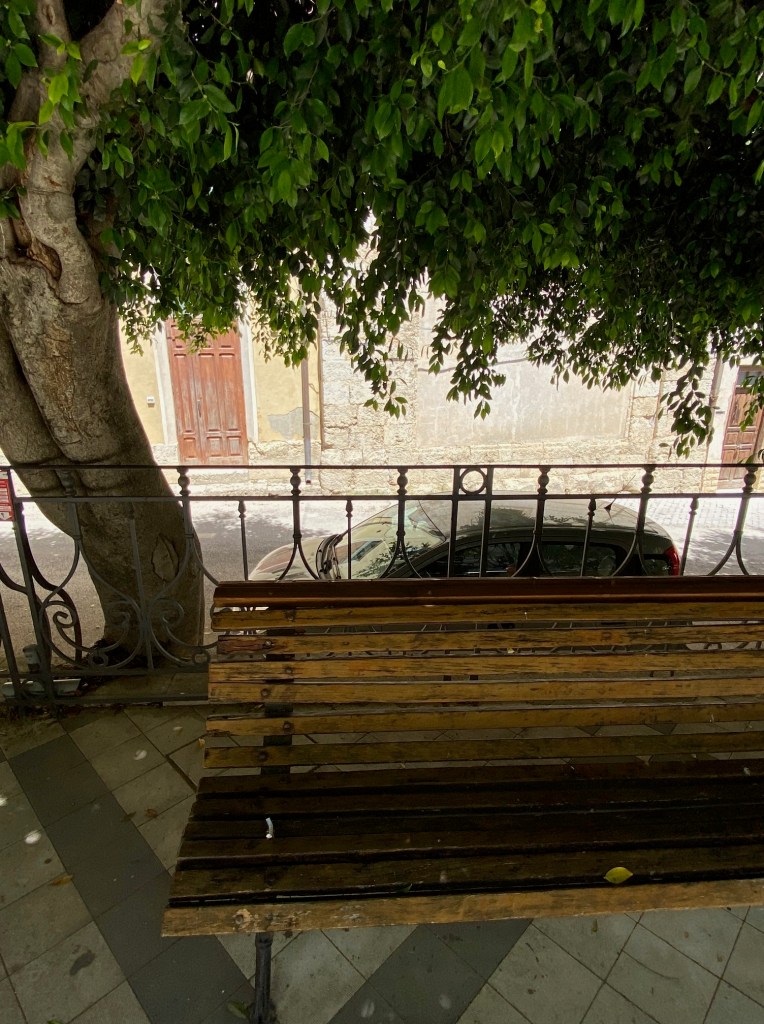
My grandfather died when both he and his family rightfully assumed they had a lot of time left together. Aunt Penny died during the height of the COVID-19 pandemic, when so many gatherings were postponed with the thought that we’d make up for the lost time soon.

Tomorrow isn’t promised. Book the flight. Take the trip. And then, even when your feet are tired or the weather doesn’t cooperate or you’re hangry, savor every moment of it. 

I’ll be forever grateful that I did. 

Standing in the Mediterranean Sea

A Blog for the Turn of the Year

We’re officially 1/52 of the way through 2023.

Did you feel shocked (like I did) when trying to process that statement? And also a little anxious about how fleeting time is? And yet also, maybe, a little relieved in knowing we’ve already made it through a week of this rocky adjustment?

The start of this year has felt rough. These past couple weeks, as 2022 wrapped up and as the new year began, I’ve had a striking number of conversations about mental health with people who are struggling. And I count myself among that lot.

It doesn’t help that it’s been cold and rainy — and at times snowy and icy, or that many of us settled in to enjoy a major Monday Night Football match-up only to watch in horror as Damar Hamlin collapsed, or that that hardship hit Buffalo (a neighboring city here, home to many loved ones) right on the heels of its devastating blizzard, or that this is the fourth calendar year in which the COVID-19 pandemic looms over our lives…

Many of us are feeling shaken, discouraged, and simply exhausted. We want to start this new year with hope and resilience but are reminded of our own mortality and how quickly life can change.

Beyond those recent and (hopefully) unusual factors, the holiday season can often stir up grief and longing. I love Christmas, easily caught up in the giddiness and magic like a child would be, and yet it makes me miss my beloved fur baby so badly that hanging up her stocking still brings tears to my eyes, 3 years after her death, and the pangs of nostalgia I feel for childhood Christmases can sting, wishing that somehow, just for a few minutes, I could be back at the top of the stairs with my brothers, waiting for our parents to be settled with their coffee and video camera, ready for us to come down and see what wonders await.

Just as the complicated mix of merriment and sadness of the Christmas season winds down, here comes the new year — a time when we put extra pressure on ourselves to feel festive, to reflect on accomplishments, to set goals, to do better. It can be exhausting!

Several years ago, I received as a gift the book Tape for the Turn of the Year, by A.R. Ammons. It’s a long, journal-like poem that he typed on a roll of adding-machine tape, written between December 1963 and January 1964. I was enthralled by the concept, Ammons challenging himself (a) to fill the roll and (b) to be forced to wrap up the piece within the confines of its medium. Returning to the page (as it were) routinely over the course of those days gives Ammons’s writing a meditative quality, finding beauty and room for contemplation in ordinary moments of ordinary days — which seems to me a beautiful way to think about time.

…all day
life itself is bending,
weaving, changing,
adapting, failing,
  succeeding

A.R. Ammons, Tape for the Turn of the Year

Ever since first hearing the book’s title, I’ve found a sort of comfort in thinking of the arrival of the new year this way, a turn. It’s not merely a beginning (and an ending) but a continuation, a wheel that will keep carrying us along.

Sometimes, making the turn is hard. Sometimes, we long for stability and familiarity, and sometimes that means acknowledging that what was once familiar is now gone, or that we’re not entirely comfortable in our current circumstances.

And that’s okay. This is but a moment of our journey.

If you are struggling:

  • please be patient and gentle with yourself. Allow yourself to feel your feelings and work through them with time.
  • remind yourself that this is a temporary state — one of my favorite mantras I’ve learned from my counselor.
  • know that you are not alone and do not need to navigate the tough times alone. Reach out to a loved one — to me! — or to a counselor or doctor or online community.

If you should choose to make any resolutions for the year, I hope they’ll be ones that truly feel good to you — things you want to do, not things you feel you should do or have to do. In my mind, the shoulds and have tos are immediately laced with anxiety and negative self-talk. (Why haven’t I done that yet? Will I really do it this time?) No one needs that sort of energy to start off the year. Or ever!

Among my resolutions this year is to dedicate more time to self-care. A friend recently told me she takes a self-care day at least once a month, and THAT is the energy I need for 2023! Self-care too often gets bumped to the bottom of the list — which leaves us less equipped to tackle everything else on that list.

Wherever this new year finds you, and wherever it may lead you, I hope you can find ways, old or new, to help yourself feel rested, refreshed, and renewed. To let go of things that no longer serve you and find more things that do.

May your 2023 be whatever you need it to be.

Muse, I’ve done the best
I could:
    sometimes you ran out
    on me
    & sometimes I ran out
    on you:
 
        I know you better now:
        you’ve come closer:
            will you
            confer the high
grace of your touch?
come & live enduring with
me:
            I’ll be faithful:
            I won’t trick you:
            I’ll give you all
            I’ve got:

A.R. Ammons, Tape for the Turn of the Year
Photo by Sumit Rai, downloaded from Pexels

A CHRISTMAS STORY: A Guidebook for Nostalgic Narratives

There are several movies I make a point of watching every year at Christmas time, in a rather ritualistic honoring of my childhood — one of which, A Christmas Story, stands out largely because it shares my reverence for nostalgia. In fact, part of the reason I love this movie is because my grandpa, who passed away when I was a junior in high school, loved it, and we’d always turn on the 24-hour TNT marathon when we were at my grandparents’ house on Christmas. But I also love it because of how its story is crafted and what it continues to teach me about good storytelling.

The magic of Jean Shepherd’s writing (in the screenplay and its source material, his 1966 book In God We Trust, All Others Pay Cash) as well as his narration of the movie is that, both as a kid and as an adult, it feels like the narrator is speaking to you in a way that resonates. When I was a kid, adult Ralphie’s narrative voice talked about his childhood in a way that implied he understood me — like he was acknowledging that all kids were in on a secret together. He accurately represented the wants and needs of “kiddom.” We shared the perspective that all of the adults in the movie (Ralphie’s parents, his teacher, even Santa) simply don’t “get it” and are being unfair by denying him his coveted Red Ryder BB gun, the thing he wants most for Christmas. Somehow, the risk of shooting his eye out sounds not terrifying to a child viewer but ridiculously overprotective. Viewing the movie as an adult, I see all too easily that Ralphie’s eager enthusiasm to own that gun —influenced partially by successful marketing and partially by jealousy that his friend Flick is getting one — blinds him to the very real risks involved. Further, I can relate to the parents’ various stressors (even without being a parent myself) — the chaotic pace of the holiday season, the cooking, the broken furnace, the blown-out tire — and settle with them into the simple comfort of watching the snow fall through the tree-lit window, wine glasses in hand, after a tiring day.

Catering to both childhood and adulthood, and blurring the lines between the two realms, surely plays a large part in the movie’s continued growth in popularity over several decades, allowing it to appeal to all ages. It also functions as a key element of the movie’s plot. Ralphie’s mother often reaches across the adulthood-childhood boundary as a calming counterpoint to his father’s temper: asking picky-eater Randy to show her “how the piggies eat,” shouting out “Jingle Bells” with the kids in the car, comforting Randy with a glass of milk and gently closing the door to his kitchen-cupboard hideout, covering for Ralphie about his displaced glasses after he gets in a fistfight. But this theme is most powerfully illustrated by the pivotal Christmas morning scene when Ralphie finally gets his beloved rifle. There is a simple beauty in the giddy, almost nervous smile that twitches on The Old Man’s face as he watches Ralphie tear into the wrapping paper, the way he moves his fingers as if loading the rifle himself, experiencing anew a moment that was so significant in his own childhood. In that moment, the divide between kiddom and adulthood that seemed so vast for much of the movie is collapsed, morphing into a shared joy and, thereby, an understanding.

The task at hand for this narrative style is to talk about childhood with the benefit of perspective gained over time, without diminishing what’s sacred about the childhood experience. The narrator has to embody both simultaneously: to recall the joys, worries, and pains of childhood so vividly that we feel the blows Ralphie lets loose on Scut Farkas, Randy’s inability to put his arms down, the delicate “nuance of phrase” in the double- and triple-dare ritual — but with the wisdom that can only be gained by years more of living, providing a frame in which to display those childhood experiences and analyze them fully.

A couple of my favorite lines illustrate this approach well:

“I went out to face the world again, wiser”

— this after the letdown of using his secret decoder pen to uncover an advertisement for Ovaltine. That last word, “wiser,” is not kid Ralphie’s interpretation but adult Ralphie’s, reflecting back on how the experience shifted his worldview. Kid Ralphie just felt disappointed and annoyed. (“A crummy commercial?”) Adult Ralphie knows how that disappointment, after such feverish anticipation, was significant enough to last and color his expectations of future promises.

“The light was getting purple and soft outside — almost time for my father to come home from work.”

I love that Shepherd describes the time of day this way, rather than saying, “It was 5:00.” It makes sense that a child would recognize that powerful image of the changing sky as indicative of his father’s impending arrival home, particularly on that day as he anticipated getting in trouble for fighting Farkas. It’s also precisely the kind of image likely to stick with him into adulthood and stay closely tied to the emotions of those earlier years.

As I hope soon to publish a personal essay I’ve written about the most formative friendship of my childhood, the Christmas Story narrative runs through my head as a prime example of this delicate task, working to merge those two such important perspectives: who I was at 11 and who I am now at 34. The intersection of the two — what I still carry with me from those playground days and what I only know of them now that I’ve lived a couple decades more — is where that aforementioned magic can happen.

I’m excited to share here an excerpt from that essay, which tells the origin story of my sixth-grade girl gang, as we savored a sudden rush of popularity and struggled to bear it responsibly. It’s important to note, as explained later in the manuscript, that we pronounced the name “my girls” — but we spelled it with an “i” because it looked cute.


The MiGirls [an excerpt]

The girls and I had already become known as a unit, but one particular afternoon cemented us as something of a legacy that reached beyond our own classroom’s walls. It was early autumn. I recall the light on the playground as having a golden hue, near sepia; it seems appropriately solemn for the occasion, so I like to tell myself it’s accurate. Regardless of the lighting and the tricks time plays on the weight of things, that day was bursting with a sense of possibility. I had come to cherish the knowledge that I was someone who could make things happen, whose voice mattered for whatever naïve, trivial reasons to those around me, and on that day I felt an urge to make good use of it.

Harper had been lurking around our tree for days, like a raccoon staking out the potential for some good loot. Creeping ever closer to where we sat in the shade, in a circle so compact our knees were touching, she seemed to be watching for the right moment to enter the ring, as if our comfortable routine were a game of Double Dutch. Listening in on our conversations was the norm, but this was more of a direct, offensive move. Rather than acting as if she were merely passing by as she mumbled to herself, she continued to saunter nearer, staring. Her eyes were always so wide and piercing; they gave me the disconcerting feeling she was just barely holding back some form of hysterics. Typically, our whispered crush confessions and giggle fits would trail off as we tried to pretend we weren’t affected by her encroaching presence, and she would soon get bored and move on. That day, though, we couldn’t seem to shake her, and the girls were insistent that I say something. They made pointed eye contact with me, gesturing subtly in Harper’s direction; there seemed to be an unspoken understanding that I should address the problem.

Harper, too, pegged me as the one: as she ventured closer, she warbled my name and beckoned with a finger that looked genuinely witch-like. What was this quality I was emitting that portrayed me as some sort of leader? I had never knowingly displayed a desire to speak for the pack. Now that the opportunity was there, though, staring me down like a dare my inner critic knew I wouldn’t take, I felt a rush akin to what I assumed being drunk must feel like. I walked away from the tree to talk with her, maybe 20 paces out. Open territory, public territory. Not our hallowed space. Away from its shelter, my composure wavered. Trying to be subtle about it, I took a slow, deep breath as I approached her, the crisp air burning my throat.

“What?” I asked flatly. I tried to evoke an effortless confidence.

She wanted to know if we could try being friends again. Even then, her view of the matter struck me as odd: she saw a friendship as something you could force. Just keep pushing until the pieces fit together.

The other three girls appeared behind me tentatively, like deer approaching a roadway.

As we rattled off the evidence against her like prosecuting attorneys, a small crowd began to gather, 15 or 20 kids, from our class and others. This rivalry had become well known. There was something thrilling about realizing that our peers talked about us, amidst their otherness, their own crafts tables and bus lines.

I wasn’t looking to be cruel; there was simply a palpable, urgent need to be rid of this topic. The dance of tenuous friendship had already been through several exhausting rounds over the previous few years; she was always looking to be absolved for her wrongdoings, though not able to assure they wouldn’t be repeated. For every point we presented that day about her past deceptions, she offered a groundless counterpoint. She wanted us simply to trust her that things would be better moving forward, but there was no trust established as a foundation. The crooked grin on her face the entire time she talked implied that she didn’t even believe herself. She was like a salesman looking to close the deal on a crappy product.

“Let me talk with my girls,” I said as I turned, luxuriating in the slow torture of it, the surge of power. I think we all knew there was no further discussion to be had. I took my time walking away, the other girls falling in line like a school of fish. I think I even put my arms around them, something I felt Rizzo might do with the Pink Ladies, complete with hip-swagger and gum-snap. (We had just watched Grease for the first time during a sleepover, so the feel of it was fresh in my mind. We had been enthralled by it, swooning over John Travolta’s combination of coy sensitivity and an oozing sexuality we didn’t yet quite understand.)

As I said it, I placed a slight, but significant, emphasis on “my girls,” highlighting the honorable selectivity of the classification. It was a moment that would live in blissful notoriety among our peers, verbalizing the bond that had long been observed and respected. I had unknowingly formalized an unwritten rule: the four of us were to be understood, consulted, and revered as a single entity. We were made stronger through our unity, and we were not to be crossed. We were a sisterhood that felt like a legend in the making. We were the MiGirls.


In posting this, I send the happiest of holiday wishes to you all, with hopes for a brighter, calmer, healthy 2021. May your dreams on this Christmas be your equivalent of Ralphie’s spectacular hip shots.

Photo by Elly Fairytale, downloaded from Pexels